

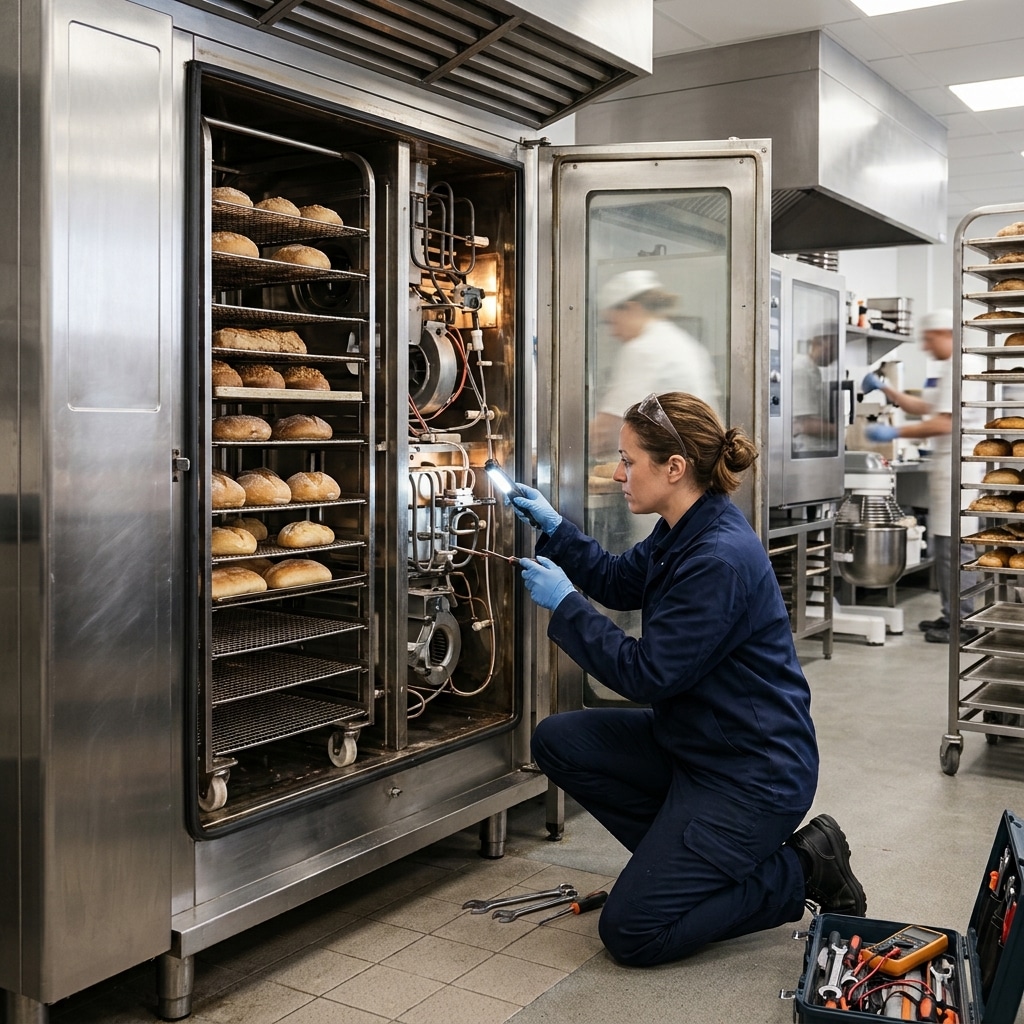
If a bakery oven bakes unevenly, drifts off its set temperature, or struggles to heat, it needs commercial bakery oven repair. These signs often point to calibration, heating parts, airflow, or controls. A trained bakery oven technician can find the cause early. Early service protects your batches and keeps the line moving.
Ovens give warning signs before they stop. You may see pale loaves on one side of the deck. A rack oven may take longer to recover after loading, or a convection fan may sound louder. Spotting these signs early turns an emergency shutdown into a planned service call.
This guide covers oven problems that warrant a technician’s visit. It explains how deck, rack, and convection ovens wear out differently. It also shows when commercial oven repair belongs at the top of your maintenance list.
Signs Your Oven Needs Repair
Inconsistent bakes are the clearest sign. The same recipe, dough, and operator should give the same bake every time. When bakes shift, the oven is often the culprit. A few common patterns help confirm it.
Watch for uneven browning on one side, shelf, or deck. Look for longer bake times or slow recovery after the door opens. Product that comes out underbaked or overbaked at the correct setpoint is another clue. Error codes, lockouts, and new fan or motor noises also deserve attention.
Rising energy bills with the same output can signal a worn part and growing energy waste. One sign may mean an early fault. Two or more signs together call for commercial bakery oven repair and a professional diagnosis.
Temperature and Calibration Problems
Temperature faults are the most common reason bakeries call for oven service. They are also easy to misread. The display may show the right number while the chamber runs hot or cool.
Temperature Drift
Drift happens when the chamber temperature slowly moves away from the setpoint. It shows up as gradual changes in color, crust, or bake time. Staff often adjust recipes to compensate, which hides the fault. Aging thermostats, worn sensors, and controller faults commonly cause it.
Hot and Cold Spots
Hot and cold spots point to uneven heat across the chamber. In a convection oven, airflow is the usual suspect. In a deck oven, a weak element or burner section is a likely cause. Both issues affect every tray you bake.
Why Oven Temperature Calibration Matters
Oven temperature calibration checks that the controller matches the heat your product receives. A technician measures the chamber at several points and compares each reading to the setpoint. Then the technician corrects the sensor, control, or part behind the gap. Regular calibration during commercial bakery oven repair keeps bakes consistent and cuts waste.
Door Seals and Heating Element Issues
Door seals and heating parts wear a little with every cycle. Daily cleaning and proper use help slow that wear. Both parts affect how evenly and efficiently an oven bakes. Worn parts here are a frequent focus of commercial bakery oven repair.
Door Seal and Gasket Wear
A worn or cracked gasket lets heat escape and cool air in. Recovery times grow longer, and the front of the chamber bakes unevenly. Energy use climbs too. Hinges, latches, and door alignment also matter, since a door must close square for any gasket to seal well.
Igniter and Burner Problems in Gas Ovens
In gas ovens, a weak igniter can cause slow ignition, repeated lockouts, or uneven burner lighting. Flame sensors, gas valves, and burner condition all affect how well the oven holds heat. A gas smell or odd flame calls for an immediate shutdown. Contact a qualified technician or your gas utility right away.
Heating Element Issues in Electric Ovens
In electric ovens, a failing element leaves part of the chamber cold. Watch for deck sections that stay cool, tripped breakers, or visible damage on the element. Wiring, contactors, and relays can cause similar symptoms. A proper diagnosis comes first so you replace the right part.
Deck vs. Rack vs. Convection: Different Failure Points
Each oven type bakes differently, so each wears in its own way. Knowing which parts carry the most load helps you describe the problem clearly. It also helps your technician narrow the diagnosis and speed up commercial bakery oven repair.
Deck Oven Repair
Deck ovens bake with radiant heat through stone or steel decks. Deck oven repair centers on even heat across each deck. A weak element, a tired burner section, or a cracked deck shows up fast as uneven bottoms or color. Steam systems and door seals round out the usual checklist.
Rack and Rotary Oven Repair
Rack and rotary ovens rely on a rotating rack, fans, and steam. When rotation slows or stalls, the bake turns uneven. Airflow and steam systems work as a team, so a fault in one can look like a fault in the other. A technician checks the drive, fans, and steam injection together.
Convection Oven Repair
Convection ovens use a fan to move hot air through the chamber. Convection oven repair often starts with airflow. A failing fan motor, bent blade, or blocked air path creates hot and cold zones. A faulty sensor can also make the controller react to the wrong temperature.
Proofers belong to a separate equipment category. Our proofer oven guide explains how proofers manage warmth and humidity to prepare dough. Baking ovens deliver the heat that bakes it, so their failure points and repair needs differ.
When to Call for Oven Service
Call for service when a problem affects product quality, safety, or output. The same applies to any fault that returns after a reset. Waiting until the oven stops often leads to an emergency repair at a busy time.
Schedule a visit when bake quality shifts and the dough, recipe, and loading all check out. Book one when the oven struggles to reach or hold temperature. Repeated lockouts, cold elements, worn gaskets, and new motor noises are clear triggers too.
Stop using the oven right away if you smell gas, notice a burning electrical smell, or see tripped breakers. Call a bakery oven technician before restarting it. Safety comes first in every service call.
Fast commercial bakery oven repair keeps your schedule predictable and reduces product waste. A professional diagnosis shows whether a repair, recalibration, or part swap fits best. Our repair services support bakeries in Bayonne and nearby New Jersey markets.
Need help with a deck, rack, or convection oven? Contact J.E. Flores Bakery Service to schedule a visit. We will help keep your production line running.
FAQs
Why is my commercial oven baking unevenly?
Uneven baking comes from uneven heat inside the chamber. Common causes include a weak element or burner section, a failing convection fan, a worn door seal, or a faulty sensor. A technician measures the chamber at several points to find where the heat drops off.
How do I know if my oven temperature is accurate?
Product that comes out overbaked or underbaked at the right setpoint points to a calibration issue. Oven temperature calibration compares the true chamber heat with the setpoint and corrects the gap. Gradual changes in bake time or color are early signs of drift.
What are the signs of a worn oven door seal?
Heat escaping around the frame is the most common sign. You may also see scorch marks near the door, uneven baking at the front, and slow recovery after loading. A cracked or flattened gasket needs replacement, and you should check the hinges and alignment during the same visit.
What causes a commercial gas oven to stop lighting?
A gas oven that stops lighting may have a worn igniter, a faulty flame sensor, or a gas valve issue. Control faults can cause the same symptom. Gas parts carry safety risks, so a qualified technician should handle the diagnosis. If you smell gas, shut the oven off and call your gas utility or a technician right away.
What is the difference between deck oven repair and convection oven repair?
Deck oven repair focuses on even heat across each deck, including elements, burners, and the deck surface. Convection oven repair centers on airflow, fan motors, blades, and sensors. Knowing your oven type helps the technician narrow the cause faster.
When should I call a bakery oven technician?
Call when a problem affects quality or safety, returns after a reset, or involves gas, electrical, or control parts. Staff can handle cleaning and simple visual checks. Heating, ignition, and calibration faults call for trained service and timely commercial bakery oven repair.
Is it worth repairing a commercial bakery oven?
Many faults are repairable, including calibration errors, worn seals, and failed igniters, elements, or sensors. The best path depends on the oven’s condition, how often it breaks down, and parts availability. Skilled repair keeps legacy equipment productive across every shift. A technician’s diagnosis shows whether repair or replacement makes the most sense for your bakery.
How often should a commercial bakery oven be serviced?
Service frequency depends on how heavily the oven runs and on the manufacturer’s guidance. Busy bakeries benefit from regular inspections and periodic oven temperature calibration. Scheduled commercial bakery oven repair and maintenance help catch worn parts early.
Who provides bakery equipment repair in NJ?
J.E. Flores Bakery Service handles bakery equipment repair NJ bakeries count on, including commercial ovens, proofers, and depanners. The team offers reliable service to bakery owners and plant managers in Bayonne and nearby New Jersey markets. Reach out to schedule a service visit.

Leave A Comment