

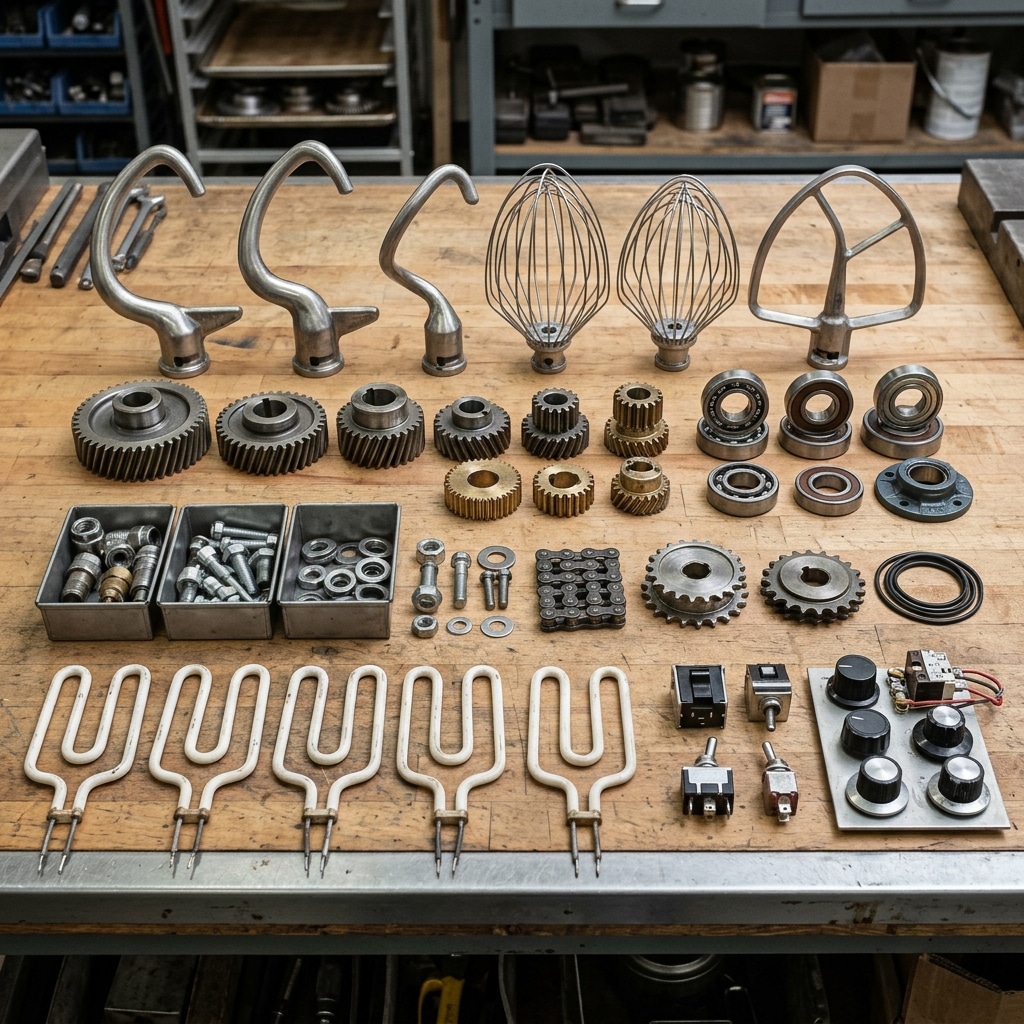
The safest way to source bakery equipment parts starts with the machine’s nameplate and the manufacturer’s exact part number. From there, choose OEM or aftermarket based on fit, materials, and downtime risk. OEM bakery parts match the original specification, and verified aftermarket options suit many common wear items. A technician confirms the part first whenever the number is uncertain, or the install affects timing, alignment, or food safety.
Guessing gets expensive in a production bakery. A part that almost fits leads to a return, a second wait, and a short shift. Treat bakery equipment spare parts as a verification task, and the line keeps moving. The same checks apply to all commercial bakery replacement parts, from any supplier.
OEM vs. Aftermarket: What’s the Real Difference
OEM stands for original equipment manufacturer. OEM parts come from the company that built your machine or its approved maker, and they match factory specifications. Aftermarket bakery equipment parts come from third parties and fit the same machines. The best choice depends on the part’s function and what a small mismatch would cost.
Where OEM Parts Fit Best
OEM parts suit components that control how a machine behaves. These include control boards, sensors, drive components, safety interlocks, and parts that set timing or alignment. They also keep warranty claims simple on machines still under coverage.
Where Aftermarket Parts Fit Best
Aftermarket parts suit fast-wearing items with known dimensions, such as many belts, gaskets, and suction cups. They are often the best option for older or discontinued machines. The rule stays the same every time. The material, size, rating, and shape must match the original part.
OEM and Aftermarket Compared
| Factor | OEM Parts | Aftermarket Parts |
| Fit | Built to the original specification | Varies by maker; verify dimensions |
| Material Documentation | Usually matches the original spec sheet | Request material and food contact documentation |
| Availability | Sometimes limited for older models | Often wide for common wear items |
| Warranty Impact | Keeps manufacturer coverage intact | May affect coverage on machines under warranty |
| Consistency | Predictable from batch to batch | Depends on the supplier |
How to Verify a Part Before You Buy
A few minutes of checking prevents most wrong orders of bakery equipment parts. Lock out and tag out the equipment before you remove or measure any component. Then work through these steps in order.
- Record the nameplate. Note the manufacturer, model, serial number, voltage, and phase, since parts often change between production years of one model.
- Find the exact part number. Use the service manual or parts diagram, and check for a newer superseding number.
- Measure the old part. Compare length, width, bore, thread, and mounting points with the replacement’s specifications.
- Confirm materials and ratings. Food-contact parts require food-grade materials, and electrical components need the right safety listing for your equipment.
- Ask why it failed. A belt worn by misalignment, or a cup torn on a damaged pan, will fail again after a simple swap.
- Check lead time and returns. Know the delivery window and confirm the part is returnable if the fit is off.
Common Parts That Fail First (Belts, Cups, Seals, Gaskets)
Most unplanned stops trace back to a short list of wear parts. Knowing their warning signs helps you order ahead of a breakdown. Many bakeries keep these items on hand as part of their bakery equipment parts and supplies stock.
Belts
Conveyor and drive belts wear through fraying, glazing, cracking, and uneven tracking. Loss of tension causes slippage, which shows up as uneven product spacing or dropped product. Correct the tracking and tension during replacement to give the new belt a full service life.
Cups
Suction cups on commercial depanners harden, crack, or tear with heat and repeated cycling. Once a cup loses its seal, the machine loses vacuum and releases product unevenly or stops releasing it. Cup size, material, and fitting style all need to match the original.
Seals
Seals hold vacuum, air, and moisture in place in depanners, proofers, and other equipment. A failing seal often looks like a separate problem, such as weak suction or unstable humidity. Check seals early whenever performance starts to drift.
Gaskets
Door gaskets on proofers and ovens lose their shape and flexibility over time. A worn gasket lets heat and humidity escape, leading to uneven proofing, longer recovery times, and wasted energy. Include a quick visual check for flattening, splits, or gaps in every routine inspection.
When Sourcing the Part Yourself Makes Sense (and When It Doesn’t)
Ordering bakery equipment parts on your own works well when the job is simple and the facts are certain. Professional help fits best when any detail is still open. The lists below show which path suits your repair.
When DIY Sourcing Works Well
- You have a confirmed part number that matches your machine’s model and serial number.
- The part is a simple wear item, such as a gasket or cup, that swaps in place with the same settings.
- Your maintenance team knows the equipment and has the right tools.
- You are restocking spares for a part your team has replaced successfully before.
When Technician Support Fits Best
- The part number is faded or worn off, or the machine has modifications.
- The same failure keeps coming back, which points to a deeper root cause.
- The repair involves controls, electrical work, gas components, or safety interlocks.
- The part affects timing, alignment, or calibration after installation.
- The machine is under warranty, and the wrong part could affect coverage.
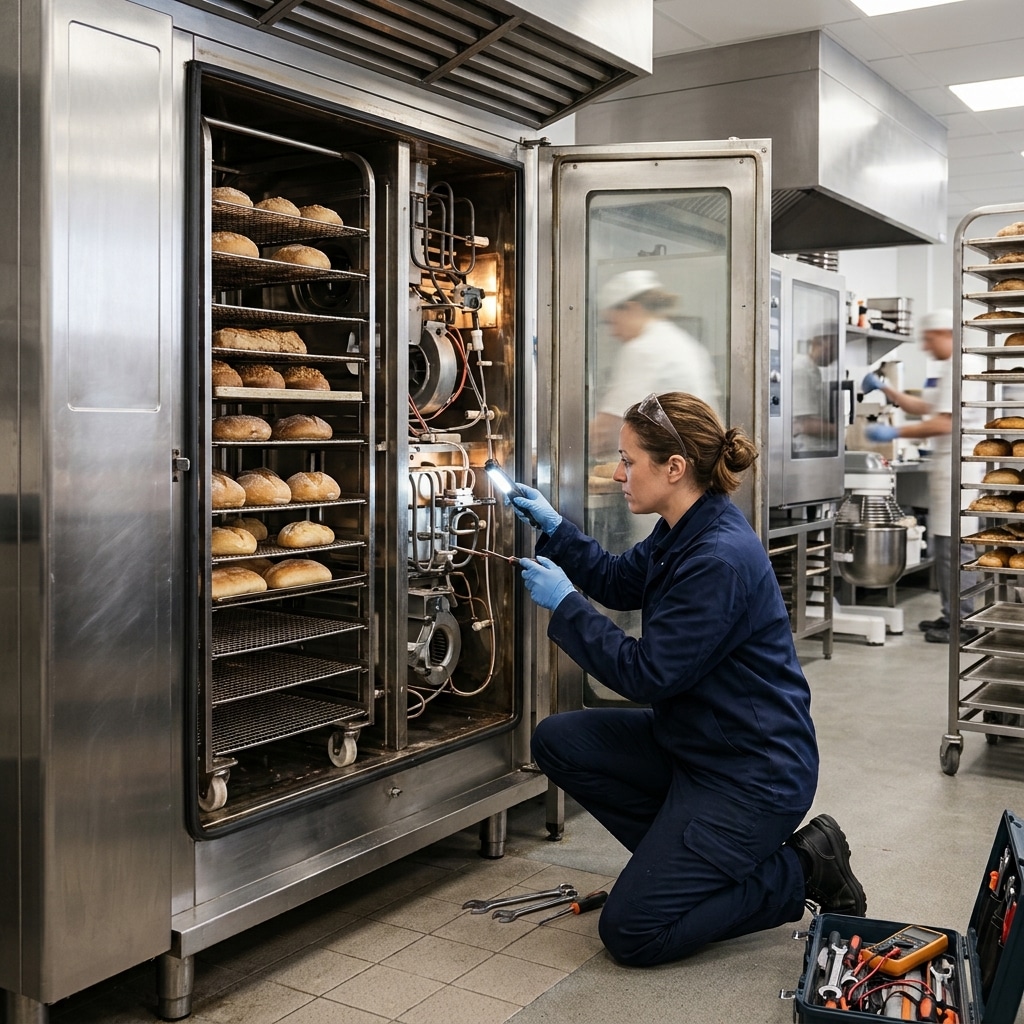
In these cases, a technician verifies the correct part, sources it, installs it, and checks why it failed. Our team at J.E. Flores Bakery Service handles this verification and installation work for bakeries in Bayonne and across New Jersey. We help you decide whether a part order or a service call makes sense. Contact us before you order, so the first part you buy is the right one.
FAQs
What is the difference between OEM and aftermarket bakery parts?
OEM parts come from the original equipment manufacturer or an approved maker and match factory specifications. Aftermarket parts come from third parties, and their quality and fit vary by supplier. OEM parts suit controls and precision components, and verified aftermarket parts suit many common wear items.
Are aftermarket parts safe for bakery equipment?
Aftermarket parts are safe when their dimensions, materials, and ratings match the original part. Food-contact parts require food-grade materials, and electrical parts need the right safety listing. The risk comes from parts that look right and differ in material or tolerance.
How do you find the right part number for your bakery equipment?
Start with the nameplate, which lists the manufacturer, model, and serial number. Use those details to look up the part in the service manual or parts diagram, and check for a newer superseding number. For bakery equipment parts on a machine with a faded nameplate or modifications, a technician identifies the part directly from the equipment.
Which bakery equipment spare parts should a bakery keep on hand?
Most bakeries benefit from stocking the wear parts that stop production when they fail. These include belts, depanner cups, seals, and door gaskets. Base your list on your own failure history and on parts with long lead times, and label each spare with the machine and part number it fits.
How do you know when a depanner cup or belt needs replacing?
Replace depanner cups when they harden, crack, tear, or lose vacuum, which shows up as dropped or uneven product release. Belts need attention when they fray, glaze, crack, track unevenly, or slip under load. Check for misalignment or damaged pans before installing the replacement.
Should you replace a bakery equipment part yourself or call a technician?
A trained maintenance team can usually swap simple wear parts once the part number is confirmed. Leave controls, electrical work, gas components, safety interlocks, and anything tied to timing or alignment to professional repair services. A technician also finds the cause of a repeat failure, so the new part lasts.
Why does the same part keep failing on bakery equipment?
Repeat failures usually mean the part is a symptom of a deeper cause. Misalignment, incorrect tension, worn mating components, or damaged pans keep wearing out each new part. Diagnosing the root cause before reordering bakery equipment parts saves you from paying twice for the same failure.
Can you still get parts for older or discontinued bakery equipment?
Distributors often still carry parts for older machines, superseded OEM part numbers, or verified aftermarket equivalents. Sourcing these bakery equipment parts requires the model and serial number, plus measurements of the original part. When the original part is discontinued, too, a technician helps you decide whether a compatible part or a repair suits your machine.

Leave A Comment