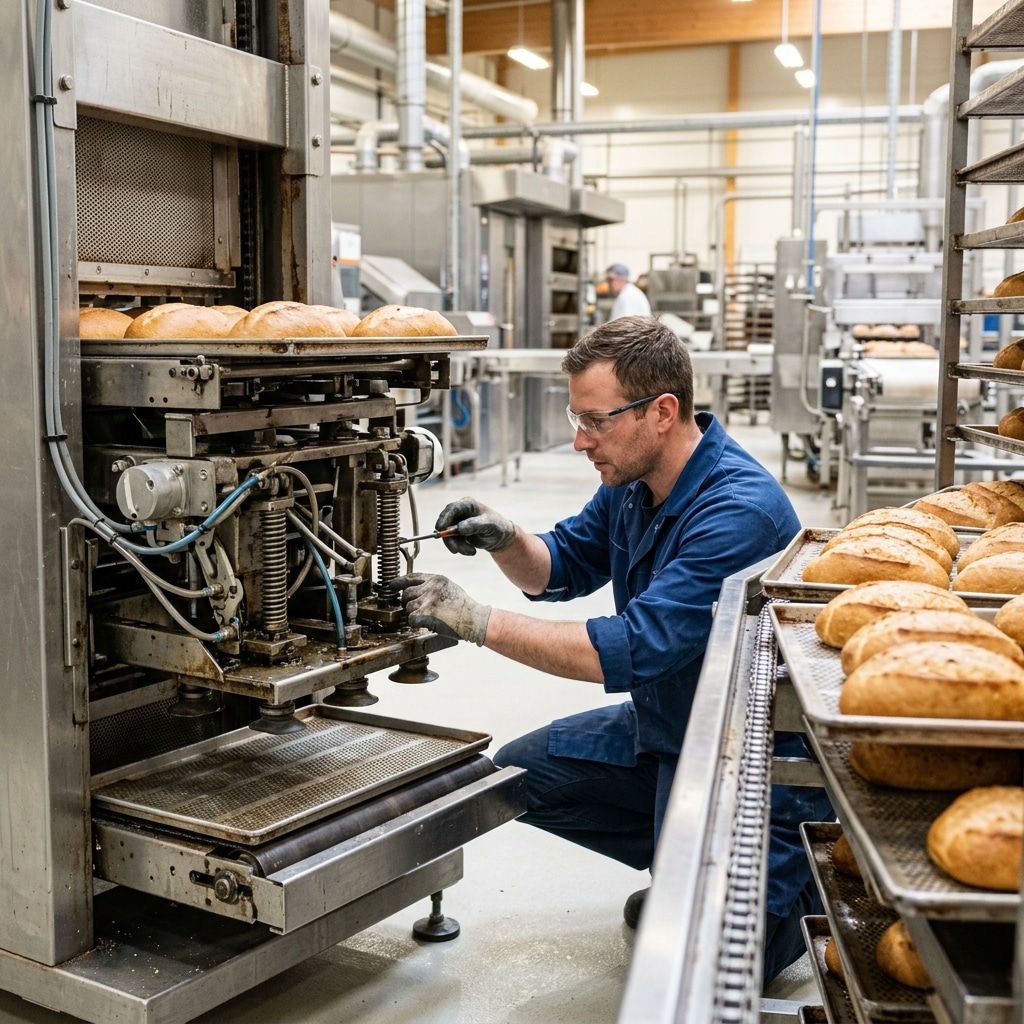
A bread depanner that releases product inconsistently points to one of three areas: suction strength, cup condition, or belt tracking. Finding the exact source early keeps a small issue from growing into a larger production stop. This guide walks through each area so a bakery team can find the cause with confidence.
Commercial bakeries running high volumes feel small drops in release consistency fast. A loaf that sticks, a unit that falls before reaching the conveyor, or a shape that comes out uneven all add up over a shift. The sections below cover the most common causes and the checks that bring release back to a steady pattern.
Why Product Release Becomes Inconsistent
A depanner depends on a close balance between suction, timing, and surface contact. When any one of these shifts, release becomes unpredictable, and the pattern often builds slowly. A unit may release cleanly for many cycles, then drop product at a random point.
This pattern usually points to gradual wear in one part of the system. Reduced vacuum pressure, worn cup surfaces, and shifted belt tension all create similar symptoms. Reviewing each area in order gives a clear path to the cause.
For bakeries that want to reduce recurring equipment issues, routine preventive maintenance can help identify developing problems before they affect production.
Check Vacuum and Suction Performance
Vacuum strength is the first area worth checking, since even a small drop in suction can cause product to separate late from the pan. Look along hose connections, gaskets, and fittings near the vacuum manifold for leaks. A steady decline in suction over several weeks often points here as the cause of an inconsistent bread depanner cycle.
Buildup inside the vacuum lines, such as flour dust, grease, or baked-on residue, can restrict airflow enough to create symptoms that look like a cup or belt issue. Cleaning the lines and testing suction at several points along the depanner head confirms whether the vacuum issue is at the source. This check narrows the search before moving further into the machine.
A regular equipment maintenance schedule can also help keep vacuum systems and related components operating consistently.
Inspect Cups and Product Contact Points
When vacuum tests come back normal, the cups are the next likely area to check on a bread depanner. Over time, cup surfaces harden, glaze, or collect residue that prevents a clean separation from the pan. Cracked or misshapen cups can also create uneven suction across the cup face.
Checking each cup for wear, residue, and even seating against the mounting plate gives a clear picture of cup condition. A cup sitting slightly off angle can cause repeated release issues at the same position on every cycle. This pattern offers a useful clue when the problem repeats at one fixed spot on the bread depanner.
When replacement becomes necessary, depanner cups can be evaluated based on machine requirements, cup condition, and production needs. High-volume bakeries can also review cup replacement considerations when worn components begin affecting release consistency.
Different machines and applications may require different cup configurations, so reviewing the appropriate cup type can help support consistent product contact.
Review Belt Tracking, Timing and Alignment
Belt condition affects release with the same weight as vacuum and cup condition. The symptoms often show up downstream from the actual cause, so an overlooked belt can look like a different problem. A belt tracking off center, running loose, or slipping shifts the timing between cup contact and pan position, and this shift on a bread depanner often leads to partial releases or drops at the transfer point.
Checking belt tension against the manufacturer’s spec, looking for uneven wear along the edges, and confirming straight tracking through a full cycle covers the main points. Timing issues tied to belt slippage often show up the same way as a cup or vacuum problem. Ruling this out early keeps the inspection efficient, even when the cups look fine at first glance.
A complete depanner cup sourcing review can also help when multiple machine lines need replacement components and consistent parts availability.
For recently installed replacement cups, a final cup replacement inspection can help confirm proper seating and operation before full production begins.
When Inconsistent Release Needs Professional Service
Basic checks, such as vacuum leaks, visible cup wear, and clear belt misalignment, sit well within reach for an in-house maintenance team. When the cause stays unclear, or the same issue keeps returning after adjustments, the problem likely sits deeper in the system, in areas such as control calibration or internal timing components. A specialist review of the depanners line brings clarity to a persistent bread depanner issue.
A detailed depanner repair assessment can identify recurring mechanical problems when basic inspections don’t reveal the source.
For broader equipment concerns, commercial bakery repair support can address production equipment issues that affect line operation.
The service team at J.E. Flores Bakery Service can diagnose a recurring release issue and confirm the exact cause. Getting ahead of a bread depanner problem early keeps downtime short and production steady.
A steady inspection routine, covering vacuum, cups, and belt tracking, keeps a bread depanner running with reliable release. Catching small changes early protects both product quality and line uptime. Reach out to the team for support whether the issue is new or has returned after previous adjustments.
FAQs
Why does a depanner release product in an inconsistent pattern?
Inconsistent releases usually point to a gradual change in vacuum strength, cup condition, or belt tracking across the system. The change often shows up as an occasional miss before it grows into a repeated pattern. Catching the shift early keeps a bakery ahead of a larger production stop.
How can we tell if vacuum strength is causing the problem?
Checking hose connections, gaskets, and fittings for leaks gives a clear first read on vacuum strength. A steady decline in suction over several weeks often signals vacuum as the source of the issue. Testing suction at multiple points along the depanner head confirms the read before further inspection.
What cup conditions lead to inconsistent release?
Cup surfaces that harden, glaze, or collect residue often lose their smooth release quality over time. Cracked or misshapen cups create uneven suction across the cup face, which adds to the pattern. Inspecting each cup for wear and proper seating against the mounting plate confirms the exact spot that needs attention.
How does belt tension affect release timing?
A belt running loose, slipping, or tracking off center shifts the timing between cup contact and pan position. This shift often leads to partial releases or product drops right at the transfer point. Checking tension against the manufacturer spec keeps timing steady across every cycle.
Can our in-house maintenance team handle basic troubleshooting?
Basic checks, including vacuum leaks, visible cup wear, and clear belt misalignment, sit well within reach for an in-house maintenance team. Many bakeries resolve these issues with routine inspection and simple adjustment. A specialist review becomes useful when the cause stays unclear after these steps.
When is professional depanner service the better next step?
Professional service becomes the better next step when an issue keeps returning after adjustment, or the source stays unclear. Deeper causes, such as control calibration or internal timing components, often need specialist tools to confirm. A service visit brings clarity and protects production uptime.
How often should we inspect vacuum, cups, and belt tracking?
Building routine inspections into a regular maintenance schedule helps catch small changes before they become repeated failures. Weekly or biweekly checks work well for high-volume bakeries running continuous shifts. Adjust the frequency to match actual production volume to keep the schedule practical and useful.
What happens if inconsistent release goes unaddressed?
Left unaddressed, small release issues tend to grow into a wider pattern that affects more units over time. Product loss, uneven shapes, and slowed production all follow from a growing pattern. Addressing the issue early keeps downtime short and protects consistent output across the line.