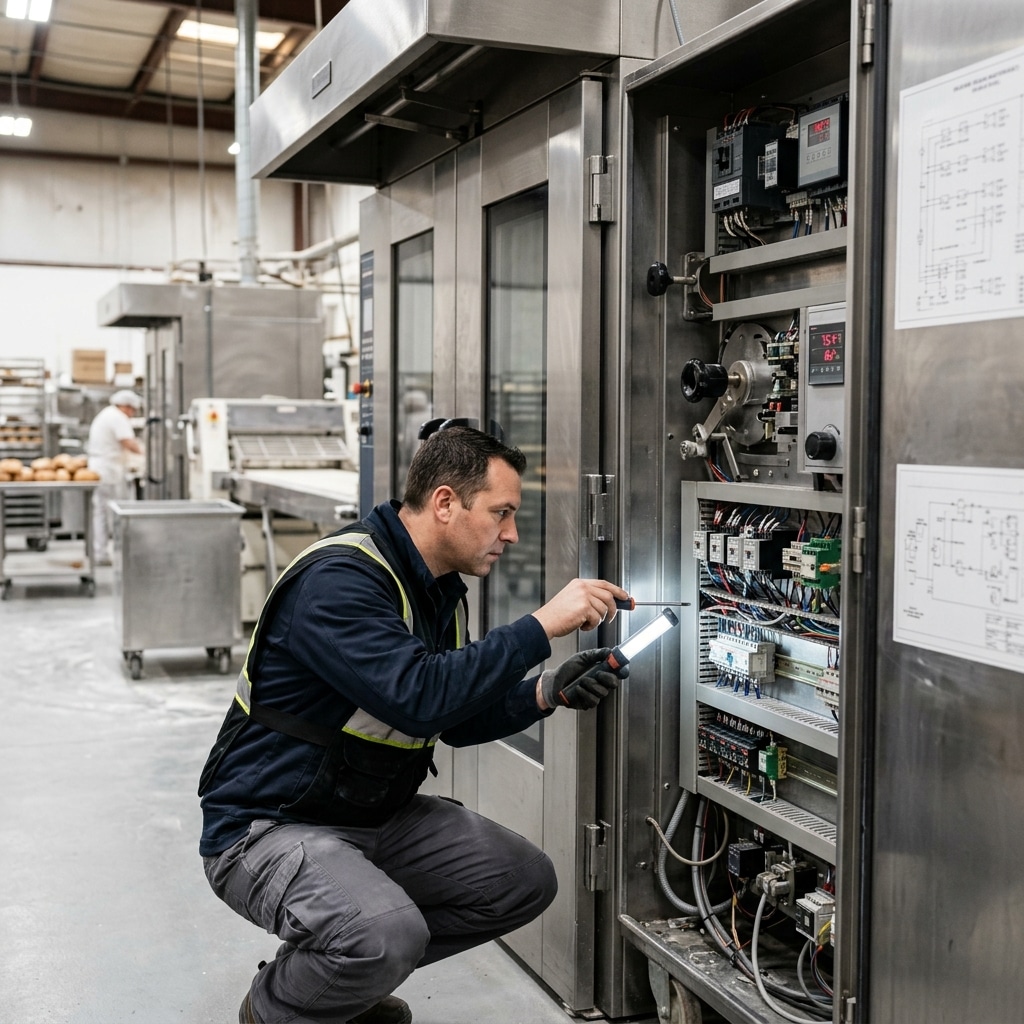
A bakery facing commercial proofer repair decisions can look at three clear signals to guide the choice: how often the unit breaks down, whether parts stay available, and how much downtime the bakery can absorb before a fix pays for itself. A proofer with an isolated, well-understood fault stands as a strong candidate for repair. A proofer with repeat breakdowns, aging parts, and worsening controls points toward replacement. The sections below walk through each signal so the decision feels clear before production stops.
When a Proofer Is Usually Worth Repairing
Repair is the right call when the failure stays isolated, and the rest of the unit performs well. A single failed sensor, a worn door seal, a slow humidity valve, or a control board glitch on an otherwise reliable unit are common examples where commercial proofer repair solves the issue quickly. A steady maintenance history and stable temperature and humidity between failures make repair a smart, cost-effective choice.
A well-maintained proofer with a single point of failure can run for years after a proper fix. Bakeries new to evaluating a repair decision can use this knowledge to address a common gap in commercial repair service and get a clearer picture of what a proper diagnosis should cover. The focus stays on the root cause of the failure, keeping the repair effective and production steady while avoiding unnecessary costs.
Signs Replacement May Be the Better Path
Replacement becomes the practical choice when failures start to compound. A pattern where the same components fail again after service, or where heating, humidity, and controls degrade together, signals a proofer nearing the end of its useful life. Bakeries that skip an evaluation for commercial proofer repair at this stage often face repeat visits within a short window.
Bakeries that see this pattern in a specific location can review our Bayonne, NJ proofer replacement guide for a full look at the replacement decision, or this proofer replacement guide focused on production capacity when growing output volume drives the decision. Both guides walk through what a full replacement looks like when local demand or production capacity drives the decision. They give bakery teams a clear, practical reference point.
Controls, Heat and Humidity Failures
Controls, heating, and humidity systems shape whether a proofer repair holds up over time. A single failed heating element or humidity injector responds well to a straightforward repair. Inconsistent proof times, temperature drift that returns after adjustment, or humidity that keeps shifting even with a new part point toward a deeper wiring or sensor issue.
These failures affect product consistency, since inconsistent proofing carries into inconsistent bake results. Commercial proofer repair resolves many of these issues when the technician catches the fault early. A control or humidity fault that returns after a repair signals a deeper issue behind the original fix, similar to patterns our team documented in this commercial depanner repair audit across other bakery equipment lines.
Parts Availability and Repeat Breakdowns
Parts availability often decides the outcome for bakeries. A well-diagnosed failure becomes a strong repair candidate when parts stay in active production and ship within a reasonable lead time. Confirming parts access keeps commercial proofer repair fast and predictable, the same way careful sourcing supported a smooth outcome in this depanner cups replacement during a new product first run.
Repeat breakdowns add to this picture. A proofer that needs three or more service calls for different issues within a short window shows declining overall reliability, even when each repair succeeds individually. At that point, the team can weigh the cost of continued service against the cost of replacement for a clear, confident decision.
How Downtime Affects the Decision
Downtime cost often tips a close decision. A short, predictable repair with parts on hand has a very different downtime profile than a repair that requires an uncertain lead time for a part. A fast commercial proofer repair keeps the production line moving with minimal disruption.
Bakeries weighing this trade-off benefit from reviewing the actual production schedule and the days affected by a multi-day or multi-week repair wait. A backup or rental unit offers a realistic option during that time, and a steady maintenance routine like the one covered in this piece on reducing energy waste through bakery equipment maintenance service helps limit surprise downtime in the first place. When downtime risk runs high alongside signs of repeat failure, replacement often becomes the lower-risk path, even when repair stays technically possible.
For a closer look at the equipment side of this decision, our commercial proofers page covers current product and service options for bakeries weighing a full replacement.
FAQ
How Do We Know If A Commercial Proofer Needs Repair Or Replacement?
The failure pattern gives the clearest signal. An isolated, well diagnosed fault on a unit with a strong maintenance history points toward commercial proofer repair. Repeat breakdowns, aging controls, and limited parts access point toward replacement.
How Much Does Commercial Proofer Repair Cost Compared With Replacement?
Costs vary by failure type, part availability, and unit size, so an on-site or phone evaluation gives the clearest answer. Isolated component commercial proofer repair often costs a fraction of a full replacement. Repeat repairs on an aging unit can close that cost gap over time.
What Are The Most Common Reasons Commercial Proofers Fail?
Heating elements, humidity injectors and valves, control boards, sensors, and door seals rank among the most frequent failure points. Many of these respond well to individual repair. Multiple failures at the same time often point to broader wear across the unit.
Can A Commercial Proofer Get Repaired When Parts Are Discontinued?
Refurbished or aftermarket parts often keep an older proofer running well past its original parts availability. Confirming lead time and quality ahead of the repair keeps the schedule predictable. When sourcing stays difficult, replacement offers a reliable long-term path.
How Long Should A Commercial Proofer Last Before Replacement Makes Sense?
Lifespan varies widely, since a well-maintained proofer with isolated repairs can run for years. A heavily used or lightly maintained unit can need replacement much sooner. Repeat breakdowns and worsening controls are better indicators than age alone.
Is It Worth Repairing A Proofer That Keeps Having The Same Problem?
A recurring issue after a completed repair often points to an unresolved root cause or a related system that also needs attention. Replacement becomes the cost-effective path going forward in this situation. Addressing the full picture helps minimize future breakdowns.
How Does Downtime Factor Into A Proofer Repair Or Replacement Decision?
Downtime cost deserves equal weight alongside the repair itself. A quick repair with parts on hand carries low downtime risk. A repair that needs a long parts wait can raise lost production costs well past the price gap between repair and replacement.
What Signs Point Toward Commercial Proofer Repair Over A Full Replacement?
An isolated fault, a steady maintenance history, and available parts all point toward repair. Stable temperature and humidity performance between failures adds confidence to that choice. These signs make commercial proofer repair the clear, cost-effective option.
Does A Maintenance Plan Help Prevent Major Proofer Failures?
A steady maintenance routine catches small issues, such as worn seals or drifting sensors, well before they grow into major failures. Regular checks keep heating, humidity, and control systems performing at their best. This approach keeps commercial proofer repair costs predictable and downtime low.