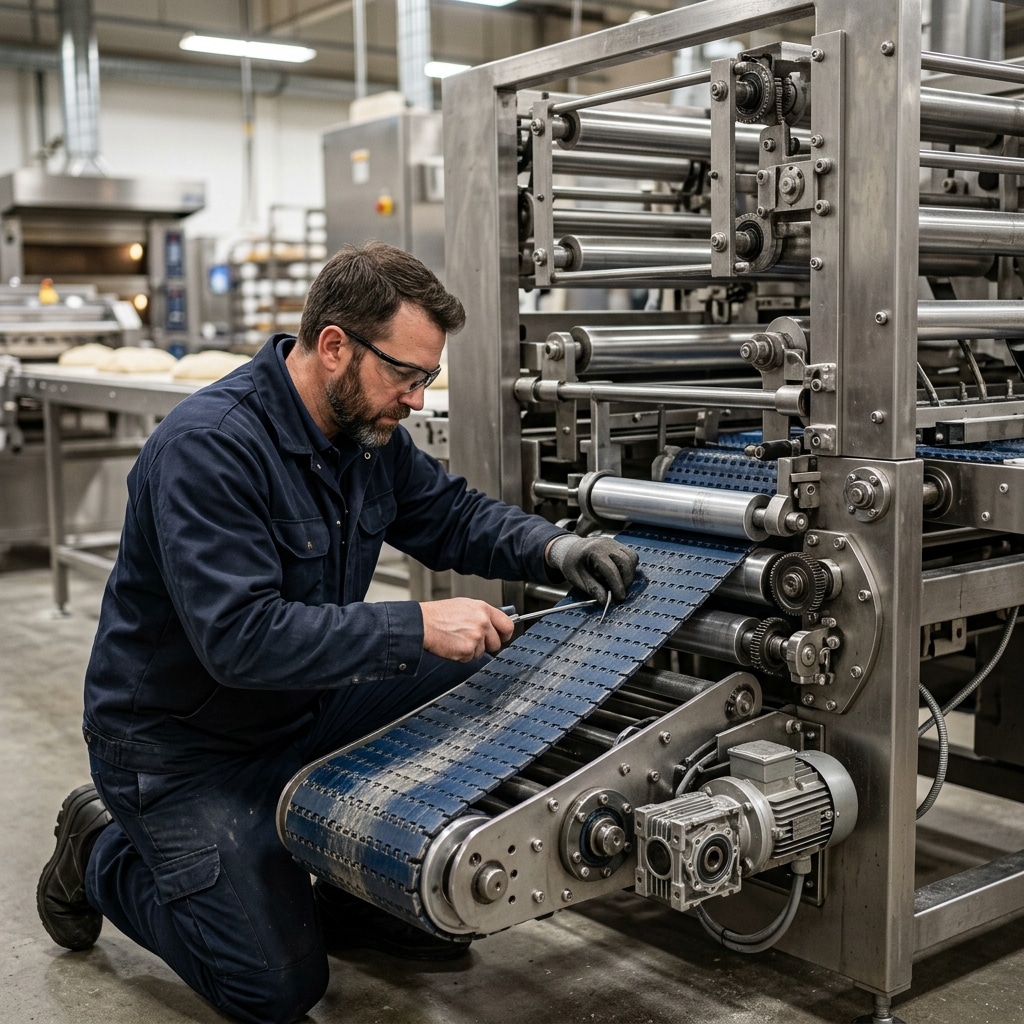
A worn depanner belt often shows up first as uneven product release, then as product drops, and finally as vacuum loss across the line. Spotting wear early through fraying, glazing, cracking, tracking drift, or reduced tension helps a bakery move from a quick adjustment to steady production. This guide walks through the signs to watch, how belt condition affects performance, and when to repair, adjust, or replace the belt.
Signs a Depanner Belt Is Wearing Out
Belt wear builds gradually, and most early signs appear during a regular walk of the line. A depanner belt with frayed edges often tracks against a nearby guide or frame component. A glazed, shiny surface reduces grip and affects how reliably product releases from the cups. Cracks at flex points and uneven wear on one side suggest the belt is nearing the end of its service life.
Common signs of a worn depanner belt include:
- Fraying along the belt edge
- A glazed or hardened surface
- Cracks at flex points
- Wear concentrated on one side
- Slippage that returns after adjustment
Any single sign calls for a closer look. Several signs appearing together, or one issue returning after adjustment, point toward replacement as the stronger next step.
How Tracking and Tension Affect Product Handling
Correct tracking and tension keep a depanner belt moving product with steady pressure and consistent release. When a belt drifts out of alignment, pressure across the cups becomes uneven and release becomes harder to predict. Tension works similarly: a loose belt loses steady contact with drive components, and a belt held too tight wears faster and strains nearby bearings.
Tracking and tension issues can look similar to belt wear at first glance. Confirming whether tracking or tension is the cause helps a team choose the right fix before ordering a replacement part. Adjusting tracking or tension can resolve many depanner belt cases without a new belt.
When Slippage Leads to Product Drops
Slippage marks the point where a depanner belt issue turns into a production concern. Once a belt loses steady grip, release becomes inconsistent, and cups may release early, unevenly, or fail to release product cleanly. This pattern often builds on itself, since added friction and heat speed up glazing and further reduce grip.
Vacuum loss tends to appear around this same point, since inconsistent belt movement affects how the system holds and releases suction each cycle. A line already experiencing product drops benefits from checking the depanner belt early in the process. This step often points to the source of the issue before you review other parts of the vacuum or control system.
Repair, Adjust or Replace?
A few guidelines help match the fix to a depanner belt symptom. Adjustment works well when the belt looks sound and tracking or tension needs a correction, and a properly adjusted belt in good shape runs reliably for a long stretch afterward. Cleaning or a small repair fits cases where buildup or a misaligned guide component is the actual cause.
Replacement becomes the clear choice once cracking, steady glazing, fraying, or slippage return after adjustment, since the belt material has reached a point where further adjustment offers only a short-term fix. A technician visit helps confirm the right path for a depanner belt when the cause stays unclear, or the same issue keeps returning. Our team supports diagnostic visits and full depanner service for bakeries working through this kind of recurring issue, with more detail on the depanner service page.
Preventive Inspection Checklist
A short, regular routine catches most depanner belt issues before they affect production. A weekly or monthly check, matched to run volume, keeps small issues from turning into unplanned stops.
A helpful checklist includes:
- Checking belt edges for fraying
- Looking for a glazed or hardened surface
- Inspecting for cracks at flex points
- Confirming even tracking across the belt
- Testing tension for steady, even resistance
- Noting slippage, even when brief
- Comparing current wear against the last inspection
Building this routine into the schedule makes it easier to plan a replacement in advance. Planned maintenance keeps production steady and supports a smooth schedule around parts and service.
FAQ
How long does a depanner belt last before replacement?
Belt life depends on run volume, product weight, and maintenance habits, so a single fixed lifespan is hard to set. Regular inspection is a better guide than a calendar-based schedule. Watching for fraying, glazing, and slippage gives a clearer picture of the belt’s current condition.
Can a depanner belt be repaired?
A belt in good condition often responds well to tracking or tension adjustments. Cleaning can also resolve cases where debris or a misaligned guide is the real cause. Once cracking, fraying, or glazing appear, replacement becomes the more reliable path forward.
What causes a depanner belt to slip?
Slippage often comes from reduced tension, glazing that lowers grip, or a tracking issue that creates uneven contact with drive components. Left alone, the condition tends to build over time and affect more of the line. Addressing tension and tracking early helps prevent slippage from recurring.
Does a worn depanner belt affect vacuum performance?
Yes, since inconsistent belt movement changes how evenly the system holds and releases suction during each cycle. Many lines notice vacuum loss around the same time belt wear becomes visible. Checking the belt early helps confirm this connection quickly.
How can a team tell whether a problem is tracking related or belt wear?
Wear concentrated on one side, or a belt that visibly drifts during operation, points to tracking. A belt showing fraying, cracking, or glazing across its surface points to material wear. Comparing these patterns during inspection makes the cause clear.
What happens when a bakery keeps running a worn depanner belt?
Continued use increases the risk of product drops and strains nearby components, such as bearings and drive parts. Vacuum performance also becomes less steady as wear continues. Replacing it early can keep a small issue from becoming a larger repair.
Should a depanner belt be replaced internally or by a technician?
Routine tension and tracking checks fit well within a regular internal maintenance schedule. Clear signs of wear, or slippage that returns after adjustment, call for a technician visit to confirm the cause. This step helps a team invest in the right parts with confidence.
What are the first signs of depanner belt wear?
Fraying along the edge, a glazed surface, and small cracks at flex points are among the earliest signs. Uneven wear on one side of the belt often points to a tracking issue working alongside normal wear. Catching these signs early supports a smooth, planned replacement.
How often should a depanner belt be inspected?
A weekly or monthly check, matched to how much the line runs, keeps small issues visible early. Comparing each inspection against the last one shows how quickly conditions are changing. This routine supports steady production and easier planning around parts and scheduling.