
Anyone searching for depanners for sale for the first time faces a big decision. A good depanner keeps your bakery line moving and protects your product from damage. This guide gives you a simple way to compare options and make a confident choice.
Many buyers look at price first and stop there. A smarter approach looks at four things together: how the machine fits your product, what cup type it uses, how well the supplier supports parts and service, and how much the supplier actually knows about depanning equipment. These four points work together to help you avoid costly surprises after purchase.
Why depanners for sale Must Match Your Product
The most important thing to check with depanners for sale is fit. Every depanner uses vacuum cups to lift product out of the pan, and the cup needs to form a clean seal against the product each time. That seal depends on your product’s shape, its density, and how firm or soft its crust is.
A product with a domed top needs a different cup than a flat one. A soft, delicate crust needs a gentle cup, while a firm crust can handle a stronger one. When the cup and product match well, the release is clean and consistent, run after run.
Skipping this step often shows up fast. Marked surfaces, torn crusts, and uneven release usually point to a mismatch, and a fresh, well-built machine can still show these signs if the cup setup is off. Checking product fit before you buy saves time and protects your product from day one.
Choosing the Right Cup Type for depanners for sale
Cup selection is one of the most overlooked parts of buying depanners for sale. Many buyers assume the machine comes with one fixed cup setup for life. Cups and retainers are designed to be swapped, and a good supplier keeps a full range in stock so you can adjust as your products change.
Standard and soft cup types cover different product densities, while flat and domed shapes cover different surface profiles. If any of your products go to customers with metal detection in place, the cup and retainer setup needs to be outside the detectable range. Confirming this early keeps your first order accurate and saves you an extra purchase later.
Retainer size matters too, and it comes in two sizes that must match your platen post exactly. This is a small detail with a big effect on future orders. A supplier who explains these options clearly makes this whole step easy to get right.
Parts and Service Support for depanners for sale
The sticker price of depanners for sale is a small part of the full picture. Most of the long-term cost comes from replacement cups, retainers, belts, and service visits over the years the machine runs. This makes supplier support one of the most valuable things to check before you buy.
A supplier who stocks every cup type, both retainer sizes and belt parts, on a planned schedule keeps your line running smoothly. Custom fabrication for unusual setups adds even more flexibility. Certified technicians who understand vacuum systems, retainer alignment, and belt wear help you catch small issues early, before they grow into bigger repairs.
Buyers who focus only on the upfront price often miss this part. Experienced operators look at parts depth and service reach first, because that is where the real savings sit over time. A supplier with a large parts inventory and a strong service team gives you steady peace of mind.
Supplier Knowledge for depanners for sale
The supplier you choose for depanners for sale shapes the whole experience. A knowledgeable supplier reviews your product line, your production volume, and any compliance needs, then recommends the exact cup types and setup that fit. That guidance is part of what you are paying for, and it protects you from having to guess.
First-time buyers benefit most from this kind of support, since it is new territory for them. A supplier with years of hands-on experience with depanning systems brings confidence to every recommendation. On-site consultations and open communication give you a clear, accurate picture before you commit to anything.
Making a Confident Choice
Buying depanners for sale goes smoothly when you look at product fit, cup and compliance setup, parts and service support, and supplier knowledge altogether. These four checks give you a full, clear picture rather than just one small piece of it. A supplier who walks you through each one turns a big decision into a simple, guided process.
Call the team ready to review your product line and production needs before you buy. A short conversation upfront can save real time and money later. Reach out today and take the guesswork out of choosing your next depanner.
Frequently Asked Questions
How do I know if a depanner will work well with my product?
Check your product’s top shape, density, and crust firmness. These three details decide which cup type creates a clean seal. A supplier can review these details with you before you buy and confirm a good match.
What cup types are available for commercial depanners?
Depanners use several cup types built for different product shapes and densities, including standard, soft, flat, and domed options. Detectable versions exist for customers with metal detection rules. A supplier who stocks the full range gives you room to adjust as your products change.
Can I change the cup setup after I buy the machine?
Yes, cups and retainers are designed to be swapped over time. This flexibility lets you adjust as your product line grows or shifts. A supplier who carries a full range makes these updates quick and simple.
Why does retainer size matter?
Retainers come in two sizes, and the correct one must match your platen post exactly. Choosing the right size the first time avoids delays when ordering replacement cups. Your supplier can confirm this detail before your first order ships.
What causes product damage right after installing a new depanner?
Damage right after installation usually points to a cup setup that does not match the product’s shape, density, or crust. This is a setup issue that can be fixed once the correct cup type is identified. A quick review with your supplier will solve this.
Why does supplier support matter more than the price tag?
The purchase price covers only a small part of the total cost over the years a depanner runs. Cups, retainers, belts, and service visits make up most of the long-term cost. A supplier with strong parts and service support keeps that cost predictable.
What should I ask a supplier before buying a depanner?
Ask about their full cup and retainer range, parts inventory, and service team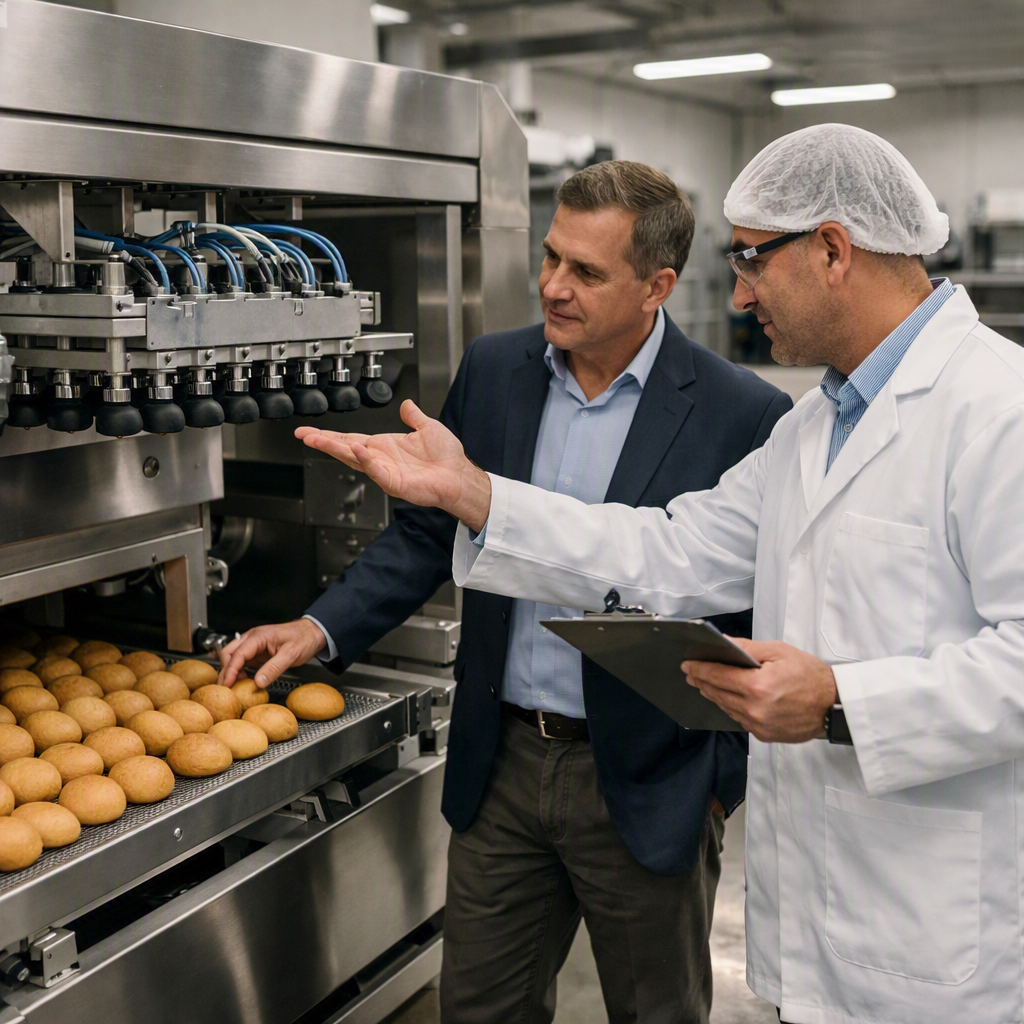 experience. Ask them to review your product line and recommend a specific setup for it. Their answers show you how much guidance you can expect after the sale.
How many cup types does a typical depanner system use?
A full depanner cup range includes standard and soft formulations, flat and domed profiles, and detectable options, for a total of ten variations. Your specific needs depend on your product and any compliance requirements. A knowledgeable supplier can narrow this down for you quickly.
Is a metal-detectable cup setup necessary for every bakery?
A metal-detectable setup is necessary only if your customers have metal-detection rules in their supply agreements. Checking this requirement early keeps your first cup order accurate. Your supplier can help confirm whether this applies to your business.
What makes a depanner supplier a good choice for a first-time buyer?
A good supplier reviews your product line, production volume, and compliance needs before recommending a setup. Years of hands-on experience and clear communication give first-time buyers confidence in their choice. On-site consultations add an extra layer of support during the decision process.