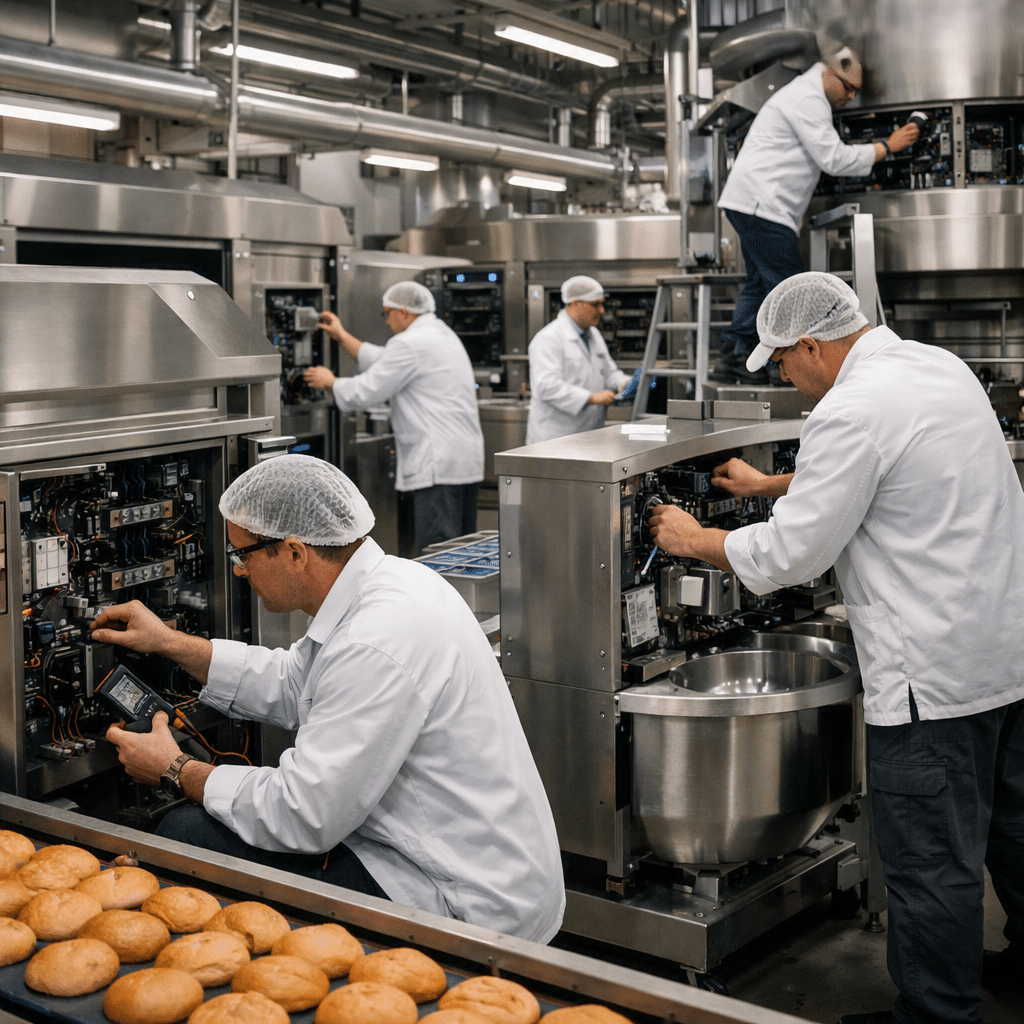
Your production line runs every day, and each station plays its part in the process. Proofers, ovens, coolers, and depanners work as a team to produce output on schedule. Bakery repair services support this team when one station slows down the pace of the whole line. Good maintenance keeps every station working at the pace the next station expects.
Every station on a bakery line depends on the pace set by the station before it. A steady pace at each step keeps output high across the full shift. Parts wear over time, and pace naturally slows unless service keeps up. Planned service keeps every station ready for the next step in line.
Bakery Repair Services and The Proofer To Oven Connection
A proofer moves trays to the oven at a set pace. When rollers wear down or axle pins loosen, the proofer slows, and the oven receives fewer trays. The oven space remains partially empty, resulting in less bread being produced on schedule. Bakery repair services replace worn rollers, axle pins, and sprocket parts to bring the proofer’s pace back to design specifications.
Plant teams often check the oven first when output drops. The oven runs well, and the true source sits one station back. Restoring the proofer’s pace also restores oven output, and both stations benefit from a single repair. FBS keeps proofer parts in stock to make this fix quick.
Cooler Intake Rate and Product Flow
A cooler receives product from the oven at a steady rate. Worn trays or a tired drive system slow the cooler down. Product builds up at the cooler entry point, and an oven backup follows soon after. Bakery repair services rebuild cooler trays and drive components to restore intake pace.
This backup pattern shows up at the oven first, though the cooler holds the true cause. New or rebuilt trays clear the queue and reopen discharge. The oven returns to its full pace once the cooler keeps up. Regular tray checks keep this pattern from repeating.
Cooler Timing and Depanner Performance
A depanner runs on a steady vacuum cycle tuned to a steady product interval. Uneven cooler output sends product to the depanner at mixed intervals. The vacuum cycle then lifts the product at a mismatched point in the cycle. Bakery repair services trace this pattern back to the cooler and fix the timing at its source.
Plant teams often check cups and retainers first, since the depanner shows the symptom. Those parts test well because the true cause sits at the cooler. A provider who watches both stations finds the link fast. This saves time by pointing straight to the true cause.
Coordinated Repairs Keep The Line Balanced
One station repair changes the pace for the next station in line. A proofer fix that restores full speed sends more product to the cooler. Whether the cooler can handle that new pace becomes the next question. Bakery repair services check every station together before any single repair begins.
An appraisal across the full line shows which station sets the pace for the whole group. This view guides the order of repairs so one fix supports the next. The line gains steady balance across every station. FBS built its appraisal process for this purpose.
Bakery Repair Services That Keep Your Line Synced
A bakery line performs well when every station works with the next in mind. Bakery repair services cover proofers, coolers, and depanners as one connected system. FBS brings parts and field experience for Latendorf, BEW, and Baker Perkins equipment. This support keeps stations paced together across the full line.
A call today opens the door to a full line review. Whether your line shows a small queue or a steady output gap, a full assessment finds the source. Bakery repair services from FBS bring every station into one plan. Call +1 (201) 437 0221 to schedule an appraisal today.
Frequently Asked Questions
What are bakery repair services?
Bakery repair services cover maintenance and parts replacement for proofers, coolers, ovens, and depanners. A full-line provider checks every station together as one connected group. This approach keeps every part of the line working at a matched pace.
Why does an oven produce low output on a normal day?
A proofer sets the pace for the oven, and a worn proofer slows that pace. The oven then receives fewer trays across the shift. Bread output drops on the oven side even though the oven runs well. Parts replacement on the proofer restores full pace to the oven.
What causes a product to queue at the cooler entry?
A cooler receives trays from the oven at a set pace. Worn trays or a tired drive system slow that pace down. Product builds up at the entry point as a result. New or rebuilt trays return the cooler to full pace.
Can a cooler issue affect depanner performance?
Yes, a cooler with uneven output sends product to the depanner at mixed intervals. The depanner vacuum cycle works best with a steady interval. A mixed interval throws off the lift-and-release step. A check on the cooler often solves the depanner symptom.
Why check every station together before a repair?
A repair on one station changes the pace for the next station in line. Fixing one station in isolation can create a new bottleneck elsewhere. A check across every station shows where the true limit sits. This full view guides a repair order that keeps the whole line steady.
What does an on-site appraisal cover?
An on-site appraisal reviews every station as part of a single system. It looks at pace and output across the full line as a group, one station alongside the next. This view shows which station limits the group output. FBS uses this appraisal to plan repairs that keep the full line steady.
What equipment brands does FBS support?
FBS supports Latendorf, BEW, and Baker Perkins equipment across proofers, coolers, and depanners. This range covers equipment found on many bakery lines. Field experience with these brands helps repairs move fast. Parts stock for these platforms keeps downtime low.
How is a bakery repair services appraisal scheduled?
A call to FBS starts the appraisal process for a bakery line. The team schedules a visit to review every station together. This visit covers pace, output, and parts condition across the line. Call +1 (201) 437 0221 to set a date.