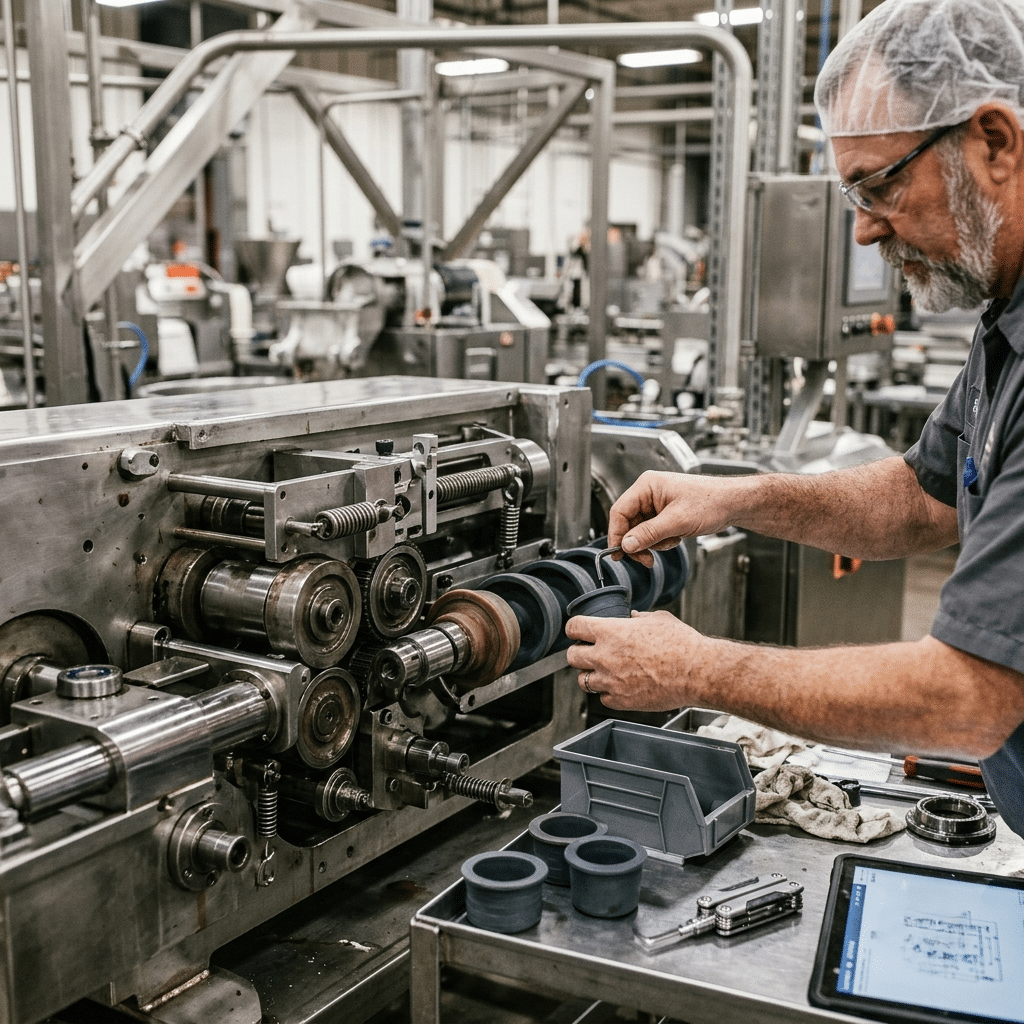
A depanner cups replacement decision should happen before a new product’s first trial run. The cup configuration that depans your current product cleanly works only for that product. A new product with a different surface, density, or compliance needs its own cup setup, confirmed early.
A new product moving from trials into production scheduling deserves a full review of the depanner station. The recipe, pan spec, and bake settings get checked often. The cup configuration deserves the same level of attention before the first scheduled run.
Why Depanner Cups Replacement Matters For Surface Geometry
The top surface of a baked product, whether domed, flat, or irregular, determines which cup profile creates a steady seal during depanning. A new product with a surface shape different from the current line needs a fresh look at the depanner cups replacement plan. This keeps the lift consistent across every batch.
Most tray-proofed breads come out with a domed top, and standard domed cups seal well against that shape. A new product with a similar gentle dome will depan cleanly on standard cups, given the right conditions and hardness. This makes the review simple for most rounded products.
Wider sandwich bread, focaccia-style products, and other flatter shapes create a different contact need. A standard domed cup may fail to make full contact with a flat surface, leaving gaps at the edges. Clear Flat, Red Flat, and Red Flat Metal cups solve this by giving even contact across the whole surface.
The pre-launch check stays simple. Confirm the new product’s surface shape against the current cup configuration before the trial run begins. This single step prevents early schedule delays.
Matching Density And Crust To The Right Cup Hardness
Dough density and crust structure at the point of depanning decide how much contact force a product can take. A firm cup applied to a delicate product can leave tears or marks that look like recipe issues. Depanner cups replacement based on hardness solves this cleanly from the start.
Standard cup types work well for products with strong structure at depanning temperature, such as firm dinner rolls and standard sandwich bread. These cups hold their shape and give steady contact. They suit products built for that level of force.
Enriched doughs, delicate artisan loaves, and soft specialty rolls call for a softer cup. Soft formulations flex with the surface and lower the contact force applied. This keeps the crust and texture intact through the whole process.
The pre-launch check compares the new product’s density and crust to the current product’s profile. A softer or more delicate product signals a clear need for a softer cup. This step protects the surface from day one.
Confirming Compliance For Metal Detection Needs
A new product headed to a customer with a metal detection requirement adds a compliance step to the cup review. Catching this need before the first run keeps the launch smooth. Catching it after the first run turns into a compliance issue.
Customers running HACCP programs with metal-detection rules need every contact part, including cups and retainers, to be within the detectable range. A station running standard cups for the current line needs a full update for a product headed to a detection-required customer. Depanner cups replacement at this stage covers both the cup and the retainer together.
A detectable cup paired with a detectable retainer completes the full assembly. Blue designated cups give line staff an easy visual check during setup. This visual layer helps confirm that the correct parts are on the correct station.
The Retainer Check Inside Depanner Cups Replacement
A cup review that skips the retainer covers only half the work. The retainer spec decides whether the cup seats correctly on the platen post. This step often gets missed during a busy launch schedule.
The retainer inner diameter must match the platen post on the station. Confirming this measurement matters most when a station moves toward a detectable assembly. A quick check here avoids a mismatch later.
Detectable compliance requires that both the cup and the retainer carry a detectable designation. Updating the cup alone while leaving the old retainer in place creates a gap in the assembly. Depanner cups replacement works best when both parts are confirmed together.
The full pre-launch confirmation covers cup type, hardness, profile, detectable designation, and retainer diameter. One short conversation before the first trial run protects the whole production week. This keeps the launch on schedule and the product safe.
Setting Up Your Depanner Cups Replacement Before Launch
Getting the depanner cups replacement right before a new product’s first trial run supports a smooth launch. A clean first run keeps the production schedule on track from day one. The right setup gives the new product its best start.
FBS carries the full range of cup types and retainer sizes, including detectable and custom parts for unique setups. Our team confirms the right configuration for any new product before the line runs. Call FBS at +1 (201) 437-0221 to set up your depanner cups replacement today.
Frequently Asked Questions
What depanner cup profile works for flat or wide bread products?
Flat or wide products, such as sandwich bread and focaccia, work best with a flat-profile cup. A flat cup provides full contact across the surface, keeping the lift even from batch to batch.
Do softer bread products need soft depanner cups?
Yes, enriched doughs and delicate artisan loaves need a soft cup to keep the surface intact. A soft cup reduces the contact force applied, helping protect the crust and texture.
Do I need metal-detectable depanner cups for a new product going to a customer that requires metal detection?
Yes, a customer running a metal-detection program needs every contact part, including the cup and retainer, within the detectable range. This keeps the whole production line in line with the customer’s compliance rules.
What retainer specification do I need when reconfiguring depanner cups for a new product?
The retainer inner diameter needs to match the platen post on the station. A detectable cup also needs a detectable retainer to complete a full compliant assembly.
Can a detectable cup work with a non-detectable retainer?
A detectable cup paired with a non-detectable retainer leaves a gap in the assembly. Both parts need a detectable designation together to fully close that gap.
Why would a new product need different depanner cups than the current product line?
A new product can carry a different surface shape, density, crust structure, or compliance need. Each of these factors can call for a different cup profile, hardness, or detectable designation suited to that product.
How do I know if my depanner station is set up correctly before a new product launch?
A full check covers four points: the cup profile, the cup hardness, the detectable designation, and the retainer specification. FBS confirms the full setup in a single call before the line runs.