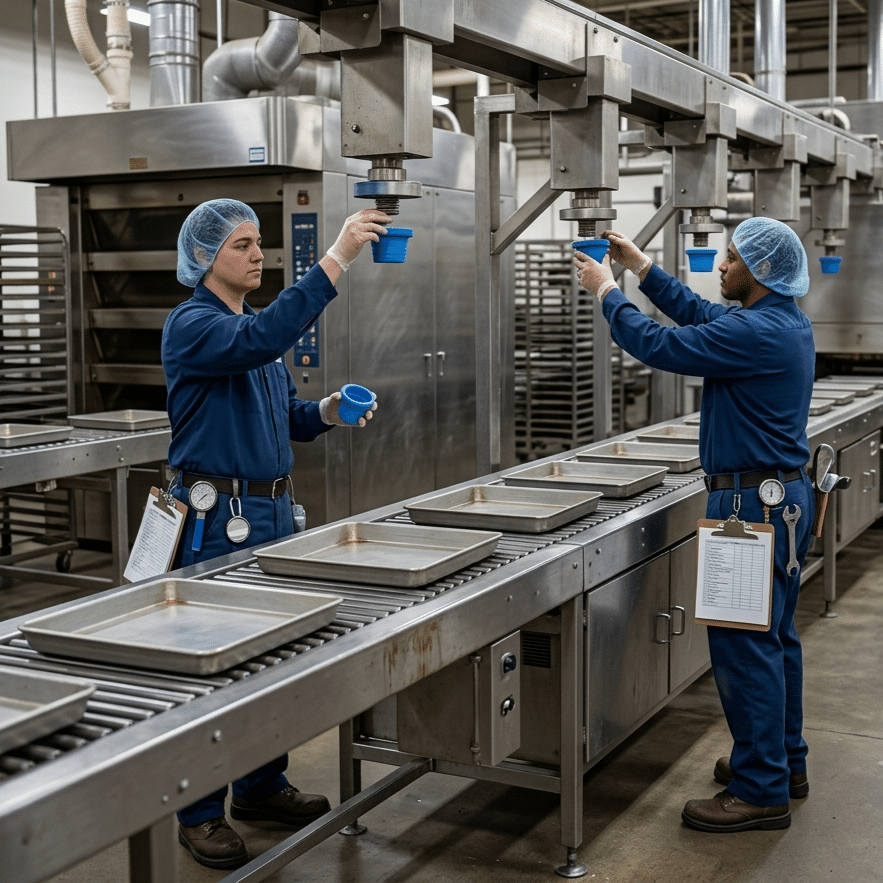
A facility running multiple depanner stations faces a consistency issue when each station is maintained differently. Depanner cups replacement across six stations, handled by three technicians on three different schedules with no shared documentation, creates gaps that manifest as compliance failures, product quality variation, and maintenance issues that a single-station fix will never resolve. The protocol is the fix. This article defines what a workable one must contain.
Spec Substitution: Why Every Station Needs a Named Cup Type in the Protocol
The most preventable depanner cup replacement error is installing the wrong cup type at a station, and it happens most often when the protocol fails to specify the correct type by name.
When a station-level cup type specification is absent from the replacement protocol, technicians default to available stock, which may or may not match the station’s requirements. A station running Soft Translucent cups (020-001) that gets restocked with standard Translucent cups (020-000) will perform differently. Vacuum hold characteristics on soft-product lines will change in ways that affect product release quality before a visible failure occurs.
Every station’s replacement record should name the cup type by exact SKU. The precise designation matters: Soft Metal Det. 020-00M, Clear Flat 022-000, or whichever type that station requires. Any technician performing the replacement will then install the correct type regardless of what else is available in the parts room.
The retainer inner diameter belongs in the same station specification. The 5/16″ variants (White 026-000, Metal 026-001, Blue Metal 026-002) and 3/8″ variants (Standard 027-000, Metal Det. 027-00M) serve different platen post sizes. A retainer installed with a mismatched inner diameter will fail to seat correctly on the platen post.
When institutional knowledge lives with individual technicians, a technician’s departure or absence leaves the next person without the correct spec, retainer size, or replacement scope for that station. A written protocol permanently closes that gap.
Compliance Gap: How the Protocol Protects Detectable-Designated Stations
A depanner cups replacement protocol that fails to designate which stations require metal-detectable cups and retainers explicitly creates a compliance gap that persists through every reactive replacement event.
Stations running within a metal detection program require a complete detectable assembly. That means a detectable cup, such as a Metal Det. 019-00M, Blue Metal Det. 019-00BL, Soft Metal Det. 020-00M, Blue Soft Metal 020-00BL, or Red Flat Metal 024-000, paired with a detectable retainer: Metal Retainer 026-001, Blue Metal Retainer 026-002, or Metal Det. Retainer 027-00M. A detectable cup installed with a White Retainer (026-000) or Standard Retainer (027-000) will leave a full-assembly compliance requirement unmet.
Compliance-designated stations should be flagged in the replacement record, with both the detectable cup type and the detectable retainer variant explicitly named. The blue-designated variants, 019-00BL, 020-00BL, and 026-002, add a visual confirmation layer. Line staff can verify detectable designation by color at the station level, which reduces substitution errors when detectable and non-detectable stock share the same parts room.
The replacement record for these stations should capture the specific SKUs installed at every depanner cup replacement event, creating an auditable trail that supports ongoing compliance documentation.
Partial Replacement: Why the Protocol Must Define the Full Replacement Scope
A depanner cups replacement protocol that permits partial platen replacement creates a vacuum performance problem that is harder to trace.
When one cup on a platen fails, and only that cup is replaced, the remaining cups are at different stages of wear. The new cup performs at full specification while adjacent cups operate at reduced vacuum hold. Uneven product release across the platen follows, showing up as product quality variation that points back to the depanner.
The replacement scope definition in the protocol should specify full platen replacement as the standard event. All cups and retainers on the platen get replaced together. This establishes a known starting point for the next replacement cycle and removes the diagnostic complexity caused by mixed-wear vacuum performance.
Retainers should be replaced during every cup replacement event. Retainer wear often coincides with cup wear and is easier to overlook during a reactive maintenance event, making it a practical part of every full-platen scope.
Parts Reliability: The Infrastructure That Makes the Protocol Executable
A replacement protocol is only as reliable as the parts supply behind it. A station-level specification that calls for Soft Metal Det. Cups and Blue Metal Retainers become unusable when either part is consistently unavailable.
A documented protocol that specifies exact cup types and retainer variants per station requires a supplier that stocks the full range: all ten cup types and all five retainer variants, in sufficient depth to fulfill a full-floor replacement order without partial fulfillment or substitution.
FBS maintains an inventory of 8,000 or more replacement parts and stocks the complete cup and retainer range, including the full detectable line, to support protocol-level ordering. Custom parts made to specification are available for stations running non-standard depanner configurations that fall outside the standard catalog. Parts are available for immediate delivery, so planned replenishment orders scheduled for the maintenance schedule have already been executed with substitute parts.
A Protocol That Holds Across Every Station
A facility running a documented, station-specific depanner cups replacement protocol with named cup types, compliance designations, full-platen scope definitions, and a reliable parts source has built a repeatable, auditable process that works across every station on the floor.
FBS carries all types and sizes of depanner cups and retainers, including the full detectable range and custom parts for non-standard stations.
Call +1 (201) 437-0221 to confirm your station-level specifications before finalizing your depanner cups replacement protocol.
Frequently Asked Questions
What is the correct way to replace depanner cups?
A correct depanner cups replacement begins with a documented, station-level protocol that names the exact cup type and retainer variant required at each station. The replacement scope should cover the full platen, with all cups and retainers replaced together. When a defined scope and specification are in place, technicians install the correct components regardless of what else is available in the parts room.
How are the wrong depanner cups prevented from being installed during maintenance?
Spec substitution is prevented most reliably by naming the correct cup type by SKU in the station’s replacement record, using the exact designation, such as Soft Metal Det. 020-00M or Clear Flat 022-000. When the protocol specifies the part, any technician performing the replacement installs the correct type. Retainer inner diameter should be part of the same station specification, since 5/16″ and 3/8″ retainers serve different platen post sizes.
How are metal detectable depanner cups confirmed as correctly installed at compliance stations?
Compliance-designated stations should be flagged in the replacement protocol, with both the detectable cup type and the detectable retainer variant explicitly named. Blue-designated variants (019-00BL, 020-00BL, 026-002) provide a visual confirmation layer that line staff can verify at the station level. The replacement record for these stations should capture the specific SKUs installed for auditability.
Should all depanner cups be replaced at once or only the damaged ones?
A standardized protocol should define full platen replacement as the standard event, with all cups and retainers replaced together. Replacing only the failed cup leaves adjacent cups at different wear stages, creating uneven vacuum hold across the platen. Full platen replacement establishes a known starting point for the next replacement cycle and removes the complexity of mixed-wear diagnostics.
What types of depanner cups are available for commercial bakery equipment?
Available depanner cup types include Translucent (020-000), Soft Translucent (020-001), and Metal Det. (019-00M), Blue Metal Det. (019-00BL), Soft Metal Det. (020-00M), Blue Soft Metal (020-00BL), Red Flat Metal (024-000), Clear Flat (022-000), and additional standard and detectable variants. Each type carries different vacuum hold and compliance characteristics suited to specific product and line requirements. Station protocols should specify the correct type by SKU.
What retainer variants are compatible with depanner cups?
Depanner retainers are available in two inner diameter sizes, 5/16″ and 3/8″, and must match the platen post size at the station. The 5/16″ variants include White (026-000), Metal (026-001), and Blue Metal (026-002). The 3/8″ variants include Standard (027-000) and Metal Det. (027-00M). Detectable-designated stations require a detectable retainer and a detectable cup to meet full-assembly compliance requirements.
How often should depanner cups be replaced?
Replacement frequency is best determined by a protocol-defined schedule tied to production cycles, paired with inspection criteria applied at each maintenance interval. A scheduled approach is more reliable because partial wear on individual cups can create vacuum inconsistencies before a visible failure occurs. Full platen replacement at defined intervals removes the mixed-wear vacuum performance problems that partial replacement leaves behind.
Where can all types of depanner cups be sourced for a standardized maintenance protocol?
A reliable source for a standardized protocol needs to stock the full range of cup types and retainer variants in sufficient depth to fulfill a complete floor order without partial substitution. FBS maintains an inventory of 8,000 or more parts, including the complete detectable cup and retainer line, with custom parts available for non-standard station configurations and immediate delivery to support planned maintenance schedules. Confirming station-level specifications with a supplier before finalizing the protocol ensures the ordered parts meet the protocol’s requirements.
Can depanner cups be custom-made for non-standard equipment configurations?
Custom depanner cups made to specification are available for stations running non-standard depanner configurations that fall outside the standard catalog. This matters for facilities with legacy equipment or proprietary platen designs where standard cup dimensions do not provide the correct fit or vacuum seal. A replacement protocol for these stations should still specify the custom part designation explicitly so that any technician performing the replacement installs the correct component.