
Managing a commercial bakery requires consistent performance from every piece of equipment. Breakdowns in bakery equipment maintenance can cause delays, increase costs, and disrupt production schedules. A malfunctioning proofer, conveyor, or cooler affects every stage of the baking process. Preventive attention ensures equipment runs efficiently, protecting both output and staff workflow. Planning maintenance transforms unexpected disruptions into manageable, routine procedures.
J.E. Flores Bakery Service offers over four decades of expertise servicing proofers, coolers, depanners, and conveyor systems for major brands. A preventive maintenance program reduces breakdowns by 70% while creating reliable budgeting and scheduling. Facilities experience smoother production lines, fewer emergencies, and improved operational predictability. By shifting focus from reactive repairs to proactive care, bakeries unlock greater efficiency. This article explores strategies for implementing preventive bakery repair programs and maximizing operational stability.
The True Cost of Reactive Maintenance
Reactive maintenance generates unpredictable costs that extend beyond immediate repairs. When a key depanner fails during peak production, operators remain idle, supervisors adjust schedules, and shipments risk delay. Emergency calls demand premium labor rates, expedited parts, and overtime, amplifying expenses. Hidden operational pressures also emerge as management addresses crises.
Preventive bakery repair services introduce predictable reliability through scheduled inspections and planned parts replacement. Production remains uninterrupted, costs stabilize, and equipment life is extended. Bakeries in the tri-state area, including Bayonne, NJ, experience fewer breakdowns and smoother workflow. This structured approach builds confidence among teams and creates measurable operational efficiency.
Why Reactive Maintenance Costs More Than You Think
The hidden costs of reactive maintenance are not always obvious, but they add up quickly:
- Emergency service premiums: After-hours calls can double standard labor rates.
- Expedited parts shipping: Rush orders carry inflated costs and increase dependency on suppliers.
- Overtime labor: Staff must step in to keep production moving.
- Production losses: Even short equipment downtime disrupts schedules and delivery commitments.
- Quality risks: Rushed repairs increase the likelihood of inconsistent products.
Preventive bakery repair services flip this model: scheduled maintenance during planned downtime, standard parts ordering without rush fees, predictable labor costs, and minimal production disruption. Equipment is properly cared for, performance is optimized, and the tri-state bakeries we serve report lower stress and predictable operational costs. By proactively maintaining proofers, coolers, depanners, and conveyor systems, breakdowns can be reduced by 70%, freeing managers to focus on growth and efficiency.
Components of Effective Preventive Maintenance Programs
A robust preventive maintenance program is a strategic, systematic approach to bakery equipment management. At J.E. Flores Bakery Service, our programs include four key pillars:
1. Systematic Equipment Assessment
The first step is a comprehensive equipment inventory. Critical production machines are identified, failure-prone components are noted, and historical failure patterns are analyzed. Equipment is prioritized based on impact to operations. This assessment forms the foundation for a targeted preventive maintenance program. Developing the program is a process: 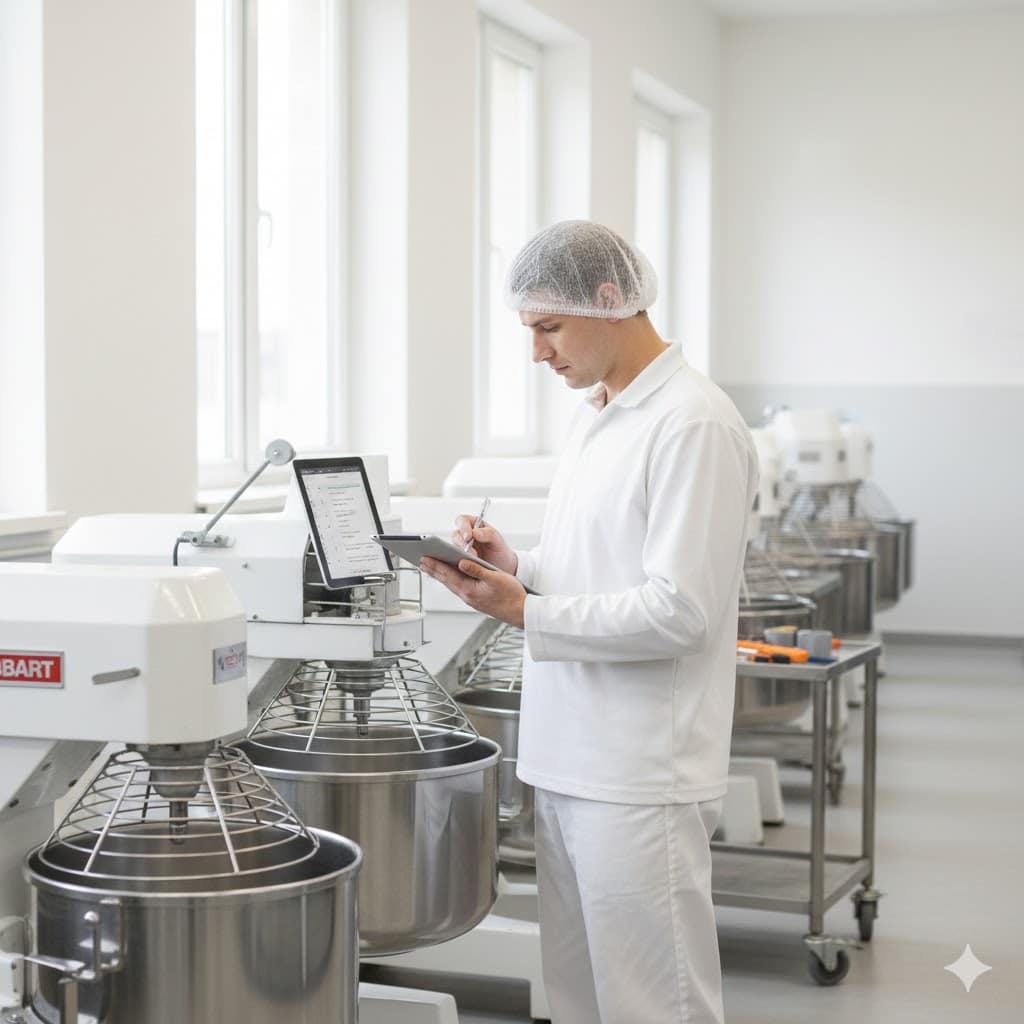 it requires collaboration, realistic timeframes, and commitment, but the result is a measurable reduction in unplanned downtime.
2. Scheduled Inspection and Service
Equipment is serviced at intervals tailored to its type and usage. Every visit includes:
- Comprehensive system checks
- Wear component evaluation and replacement
- Performance testing and calibration verification
- Documentation of findings and recommendations
This ensures that proofers, coolers, depanners, and conveyor systems are consistently performing at optimal levels.
3. Parts Management Strategy
A key differentiator in preventive programs is parts availability. Critical components are inventoried on-site, long-lead items are ordered in advance, and custom fabrication capabilities cover legacy equipment. Standardized parts management reduces emergency procurement costs and keeps production running smoothly.
4. Service Scheduling and Coordination
Maintenance schedules are aligned with production to minimize disruption. Our Bayonne-based team coordinates across multiple equipment types and maintains 24/7 emergency coverage—not as a primary solution, but as a safety net between scheduled visits.
5. Documentation and Continuous Improvement
Maintenance history is tracked for every piece of equipment. Performance trends inform adjustments in service intervals, and predictable budgeting supports strategic planning. Continuous improvement ensures the preventive bakery repair services program evolves with operational needs, keeping equipment reliable year after year.
From Reactive to Preventive
Transitioning to preventive maintenance is a phased approach:
Phase 1: Assessment and Planning (Months 1-2)
- Complete inventory and condition assessment
- Identify highest-priority equipment
- Develop a customized schedule
- Establish critical parts inventory
- Structure service agreements
Phase 2: Initial Implementation (Months 3-6)
- Begin scheduled maintenance for priority equipment
- Track emergency response frequency
- Train staff on monitoring and reporting
- Refine parts inventory
- Adjust program based on operational realities
Phase 3: Expansion and Optimization (Months 7-12)
- Extend program to all equipment
- Optimize service intervals using performance data
- Track ROI and operational improvements
- Minimize production impact
- Cultivate preventive mindset among staff
Ongoing Maintenance (Year 2+)
- Routine maintenance becomes standard practice
- Budgeting is predictable
- Continuous optimization improves long-term equipment performance
- Unexpected failures are rare
Success depends on management commitment, operator involvement, and partnership with experienced service providers like J.E. Flores Bakery Service, specialists in Latendorf, BEW, and Baker Perkins equipment.
Measuring Success and ROI
Effectiveness is measured across three dimensions:
Operational Metrics
- Unplanned downtime frequency and duration
- Emergency service calls versus scheduled maintenance
- Production schedule adherence
- Equipment performance consistency
Financial Metrics
- Total maintenance costs
- Emergency service expense reduction
- Production loss prevention
- Equipment lifespan extension
Planning Metrics
- Budget variance accuracy
- Parts inventory turnover
- Service scheduling efficiency
- Long-term capital planning reliability
Typically, early months may reflect similar total costs to reactive approaches, but by months 6–9, emergency incidents decline noticeably. By year 2, bakeries achieve the substantial 70% breakdown reduction that demonstrates preventive maintenance as a strategic operational advantage.
Building Maintenance as a Competitive Advantage
Preventive bakery repair services are a business differentiator. Bakeries with reliable equipment can meet production schedules, maintain consistent product quality, reduce stress, and free management to focus on growth.
With over 40 years of experience, J.E. Flores Bakery Service provides full-service preventive programs across proofers, coolers, depanners, and conveyor systems. Our tri-state coverage from Bayonne ensures responsive on-site service, while 24/7 emergency availability provides a safety net.
Reducing breakdowns by 70% starts with systematic assessment and planning. Let’s evaluate your current equipment, develop a customized preventive maintenance program, plan critical parts inventory, align service scheduling with production needs, and transition your bakery from reactive to preventive operations. The result is smoother production, predictable costs, and a healthier bottom line.