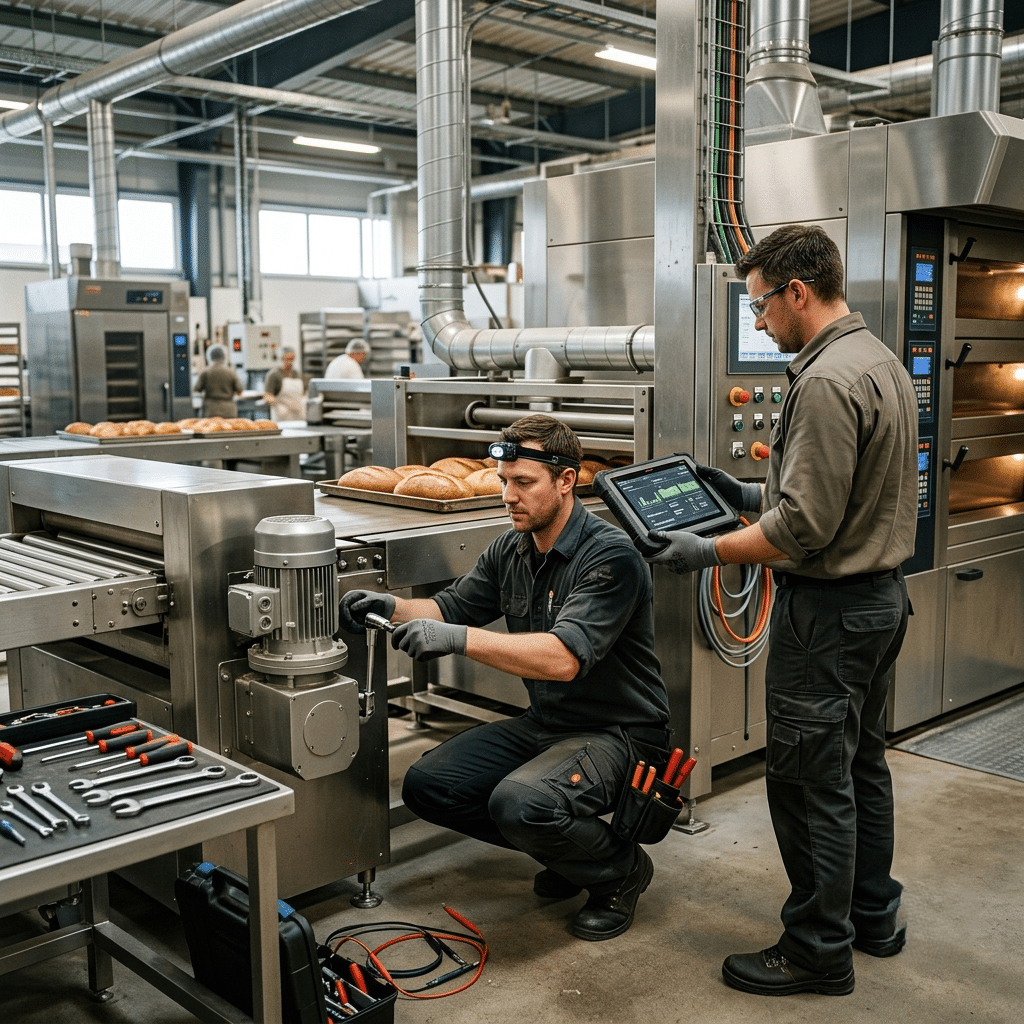
A bakery equipment maintenance service helps commercial bakeries lower their utility bills while keeping equipment running smoothly. Equipment can run with no visible failures and still draw more energy. Degraded machines work harder to produce the same output, and that extra effort shows up on the energy bill. Maintenance keeps every system working at the energy level for which it was built.
This connection matters for plant managers, operations directors, and sustainability officers tracking rising costs. It also matters for CFOs looking for savings beyond procurement and logistics. Once equipment condition is linked to energy use, the path to lower costs becomes clear.
Proofer Mechanical Efficiency: How Drive and Tray Wear Increase Energy Draw
A proofer with worn chain tension, aging drive parts, or a damaged tray population needs more energy to move the same product through the same cycle. This extra energy use stays hidden in daily output but appears clearly on the utility bill. A bakery equipment maintenance service keeps these components working at their intended performance level.
Chain tension that drifts from specification raises resistance along the conveyor path, and the drive system works harder to keep pace. Worn drive parts add friction that builds on this resistance over time. Damaged trays create an uneven load on the conveyor, and the drive system uses more energy to maintain steady motion.
Routine adjustments, lubrication, and replacement of worn parts bring the proofer back to its designed energy profile. A certified technician inspection paired with a ready supply of proofer trays and parts keeps this process simple. This is one of the clearest ways a maintenance routine protects energy efficiency.
Cooler Energy Load: Why Degraded Tray Systems Make the Cycle Work Harder
Cooler systems with worn trays and conveyor components require longer cycles or higher output to achieve the same product temperature. This added energy use happens with no change to the production schedule. A consistent bakery equipment maintenance service keeps cooling cycles efficient and predictable.
Cooler trays guide product through the cooling airflow, and worn trays create uneven cooling across the batch. The system compensates by running longer to bring every product to the target temperature. Worn conveyor parts add drag, increasing energy use and causing uneven movement through the cooler.
Restoring the tray population through reconditioned cooler trays improves product quality and energy use. This step closes the gap between the cooling cycle the system runs and the cycle it needs. A complete tray inventory makes this restoration easy to schedule.
Depanner Energy and Labor Cost: What Worn Cups and Retainers Actually Cost Per Shift
Worn depanner cups and misaligned retainers increase costs by requiring higher vacuum use and additional manual work. These costs build quietly and rarely appear on a standard equipment report. A reliable bakery equipment maintenance service keeps both energy use and labor time under control.
As cup seals wear down, the vacuum system needs more energy to keep a steady lift on each product. This added energy use repeats across every cycle and every worn cup on the platen. Inconsistent product release also pulls operators away from other tasks to handle products by hand.
Replacing worn cups with the correct type and confirming retainer alignment solves both issues at once. A full cup and retainer inventory, paired with on-site technician service, keeps this fix straightforward. This single step protects both energy use and labor time.
The Maintenance Visit as an Efficiency Reset: What Well-Oiled Precision Machinery Means for Operating Costs
A certified technician visit that includes adjustments, lubrication, and part replacement resets the equipment to its designed performance level. This reset restores energy draw, mechanical resistance, and system load to their original baselines. A scheduled bakery equipment maintenance service makes this reset a regular part of bakery operations.
Equipment running at this precision level performs like a well-oiled machine, with every part working at its intended efficiency. A single visit covering the proofer, cooler, and depanner resets the efficiency baseline across the full production line. This approach saves time and gives a clear view of equipment performance.
The energy savings from this reset are sustained throughout every maintenance cycle, providing bakeries with steady, predictable savings. A bakery’s energy bill reflects its equipment condition as much as its production schedule. Equipment maintained at this standard uses the energy it was designed to use, cycle after cycle.
Closing
A consistent bakery equipment maintenance service keeps proofers, coolers, and depanners working at their designed efficiency. This routine reduces energy waste and stabilizes operating costs across every production line. FBS offers certified technician visits that include adjustments, lubrication, part replacement, and full inspection.
Whether a bakery runs one shift or several, this service keeps equipment ready and efficient. Call +1 (201) 437-0221 to schedule a bakery equipment maintenance service built around the bakery’s energy goals.
FAQs
How does the proofer component wear increase energy use in commercial bakeries?
Worn chain tension and aging of drive parts increase resistance in the proofer conveyor, and the drive system requires more energy to maintain the same speed. Damaged trays create an uneven load, which further increases energy use. Regular bakery equipment maintenance ensures these parts operate at their intended level.
Does cooler tray wear raise energy costs in commercial bakery operations?
Yes, worn cooler trays create uneven cooling across the batch, and the system runs longer to reach the target temperature. This added cycle time increases energy use without changing production volume. Reconditioned trays restore even cooling and bring energy use back to its expected level.
Do worn depanner cups raise energy and labor costs in commercial bakeries?
Worn cups degrade seal quality, and the vacuum system consumes more energy to maintain a steady lift on each product. Misaligned retainers also lead to manual handling, which adds labor time. Replacing these parts restores efficient release and lowers both costs.
What does a bakery equipment maintenance service visit do for energy efficiency?
A certified visit resets equipment to its designed performance level through adjustments, lubrication, and replacement of parts. This reset lowers energy consumption across the proofer, cooler, and depanner in a single visit. The result is steady energy use that matches the equipment design.
How often should commercial bakery equipment receive maintenance to manage energy costs?
Service frequency depends on production volume and equipment type, and a certified technician can guide the right schedule. The clearest sign a bakery needs service is rising energy use without a change in output. Regular visits keep this signal in check before it grows.
Can maintenance lower a bakery’s utility bill without new equipment purchases?
Yes, most added energy use comes from equipment compensating for worn parts, and restoring those parts solves the issue directly. This approach raises efficiency without requiring new machines. A steady maintenance routine keeps energy costs predictable over time.
Is reconditioning cooler trays a good alternative to full replacement?
Reconditioned trays restore even product positioning and structural strength, which supports both product quality and energy efficiency. This option gives bakeries a practical path to better performance. It also extends the working life of existing equipment.