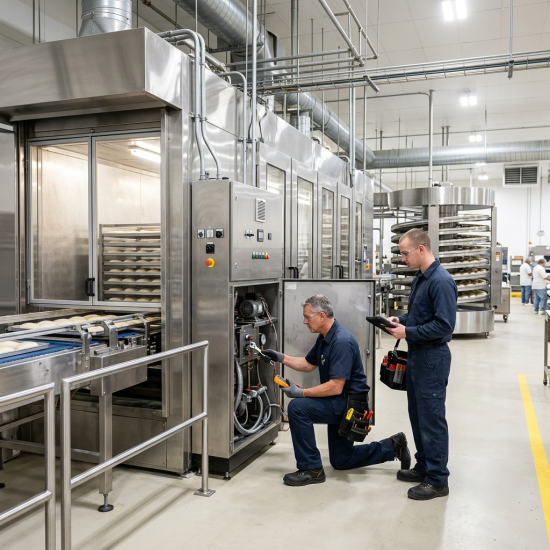
Most commercial bakeries give proofers a scheduled visit, a steady vendor relationship, and quick attention when something looks off. Coolers receive service when something breaks. This pattern grows from a simple feedback signal, since proofer problems show up in product quality right away, while cooler wear builds slowly and blends into everyday production changes. Bakery repair services built for cooler systems close this gap and give plant teams the same level of confidence they already have with their proofers.
Why Coolers Get Less Attention Than Proofers
Commercial cooler systems are often underserviced in bakery maintenance programs because their main failure mode moves slowly. A proofer failure creates an immediate, visible drop in product quality, and this pushes it to the top of every maintenance list. A cooler shows wear through small shifts in handling and cooling consistency, which are easy to attribute to humidity, ambient temperature, or upstream changes on the line.
Tray population wear follows the same quiet pattern. By the time a few trays show visible damage, the broader tray population has already worn down, affecting product handling. Plant teams that regularly schedule bakery repair services for coolers catch this wear early and keep performance steady across the whole tray population.
This pattern builds structural risk over time. A maintenance program built around urgent signals will naturally place coolers lower on the list, since the system rarely produces an alarm strong enough to compete with the proofer for attention. Risk grows quietly, and a steady bakery repair services plan gives that risk a clear outlet before it becomes a costly event.
What Gradual Cooler Tray Wear Costs Before Anyone Notices
Tray wear builds across months and shows up in product quality reports and production variation long before a visible mechanical failure appears. Worn trays carry product less evenly through the cooling cycle, and uneven tray surfaces and inconsistent spacing create handling variation that affects cooling uniformity. This shift in product consistency often appears before any clear mechanical sign of trouble.
Worn tray populations also place an uneven load across the conveyor system. This uneven load builds extra stress on drive components and chain systems over time, and the resulting wear increases the total cost of deferred maintenance. Bakery repair services that include full-tray assessments catch this stress pattern early and protect the surrounding mechanical system from additional wear.
When degradation reaches a clear failure point, such as a tray jam or a drive system failure, the result is an emergency repair event with a higher cost attached. This cost reflects the value of the proactive maintenance that was set aside earlier. Scheduled bakery repair services give plant teams a way to address tray wear on their own timeline, with planned costs.
A Proactive Option Many Cooler Operators Have Yet to Use
Most operators managing worn cooler trays see two paths ahead: continued use of degraded trays until a failure forces action, or a full investment in new tray replacement. A proactive option exists between these two paths. Reconditioned trays restore tray population performance at a cost point below full replacement, enabling proactive maintenance earlier in the wear cycle.
Reconditioned tray availability falls outside the usual offerings from general parts suppliers, since it requires both deep inventory and the technical expertise to confirm that reconditioned trays meet production standards for each platform. Many operators have only seen two choices offered to them: new trays or continued use of worn ones. Knowing this third option exists shifts maintenance decision timing and makes proactive bakery repair services available earlier in the process.
This shift matters for plant budgets and production planning alike. Reconditioned trays give operations teams a clear, affordable middle step, keeping tray performance steady while full replacement remains available when it makes the most sense. Bakery repair services built around this option give plant teams more control over timing and cost.
What Properly Resourced Cooler Bakery Repair Services Look Like in Practice
A cooler maintenance program that matches the attention given to proofers includes four parts: tray population assessment, reconditioned tray availability, platform-specific expertise, and full parts depth. These four elements turn cooler service from a reactive call into a steady, planned program. Plant teams that build their bakery repair services around these four elements gain the same confidence in their coolers that they already have in their proofer.
Tray population assessment covers the entire tray set, giving plant teams a clear, condition-based view of the system’s status. Reconditioned tray availability turns that assessment into action, since findings move straight into a maintenance plan. Platform-specific expertise across Latendorf, BEW, and Baker Perkins systems is important, as drive systems, tray specifications, and wear patterns vary by platform.
A full spare parts inventory rounds out the program, since planned replenishment keeps parts on hand for scheduled work. FBS brings all four elements together through a wide tray inventory, a reconditioned tray supply, platform expertise, and a parts inventory spanning thousands of items. This comprehensive approach provides plant teams with bakery repair services that meet the standards already set for their proofer program.
Give Your Cooler the Attention It Has Earned
A cooler’s quiet wear pattern is the same trait that makes it the most overlooked system in many bakery operations. A steady, proactive plan turns that quiet pattern into an advantage, since small signs of wear get addressed early, before they grow into a costly repair event. FBS brings the same parts depth and platform expertise to coolers that bakeries already expect from their proofer service.
FBS provides bakery repair services for commercial cooler systems, including full tray inventory, reconditioned tray availability, and platform expertise across Latendorf, BEW, and Baker Perkins systems. Call +1 (201) 437-0221 to talk through your cooler’s current condition and what a proactive plan could look like for your plant.
Frequently Asked Questions
Why do commercial bakery cooler systems get less maintenance attention than proofers?
Cooler wear builds slowly and shows up as small shifts in product handling, while proofer issues create an immediate, visible drop in quality. This quiet pattern keeps coolers lower on most maintenance priority lists, even as steady wear builds beneath the surface.
What are the signs of worn cooler trays in a commercial bakery?
Worn trays create uneven product handling, reduced cooling uniformity, and shifts in final product consistency. These signs often appear in quality reports before any visible mechanical issue shows up on the floor.
Are reconditioned bread-cooler trays available as an alternative to a full replacement?
Reconditioned trays give plant teams a proactive option between continued use of worn trays and full replacement. This option restores tray performance at a lower cost and enables earlier maintenance timing.
What should a commercial bakery cooler maintenance and repair service include?
A complete program includes tray population assessment, reconditioned tray availability, platform-specific expertise, and full spare parts inventory. Together, these elements support steady, planned maintenance for cooler systems.
How often should bakery cooler systems receive maintenance?
Cooler systems benefit from scheduled assessments, as proofers do with planned visits. This regular schedule helps catch tray wear early and supports steady production output.
What platforms does FBS support for cooler repair services?
FBS supports Latendorf, BEW, and Baker Perkins cooler platforms with technicians familiar with each system’s drive components, tray specifications, and wear patterns. This platform-specific knowledge supports accurate assessments and reliable repairs.
Whether a cooler shows visible wear or quiet performance drift, when should a plant call for service?
A plant benefits from a call as soon as product handling or cooling consistency shows any shift from normal. Early contact supports a proactive plan.